The Two-Loaves-a-Week Sourdough Meal-Prep Bake Day
There is a certain kind of baker who does not want sourdough to be an every-day project. They want one good bake day, a few loaves at the end of it, and a week of toast, sandwiches and dinner bread without any more fuss.
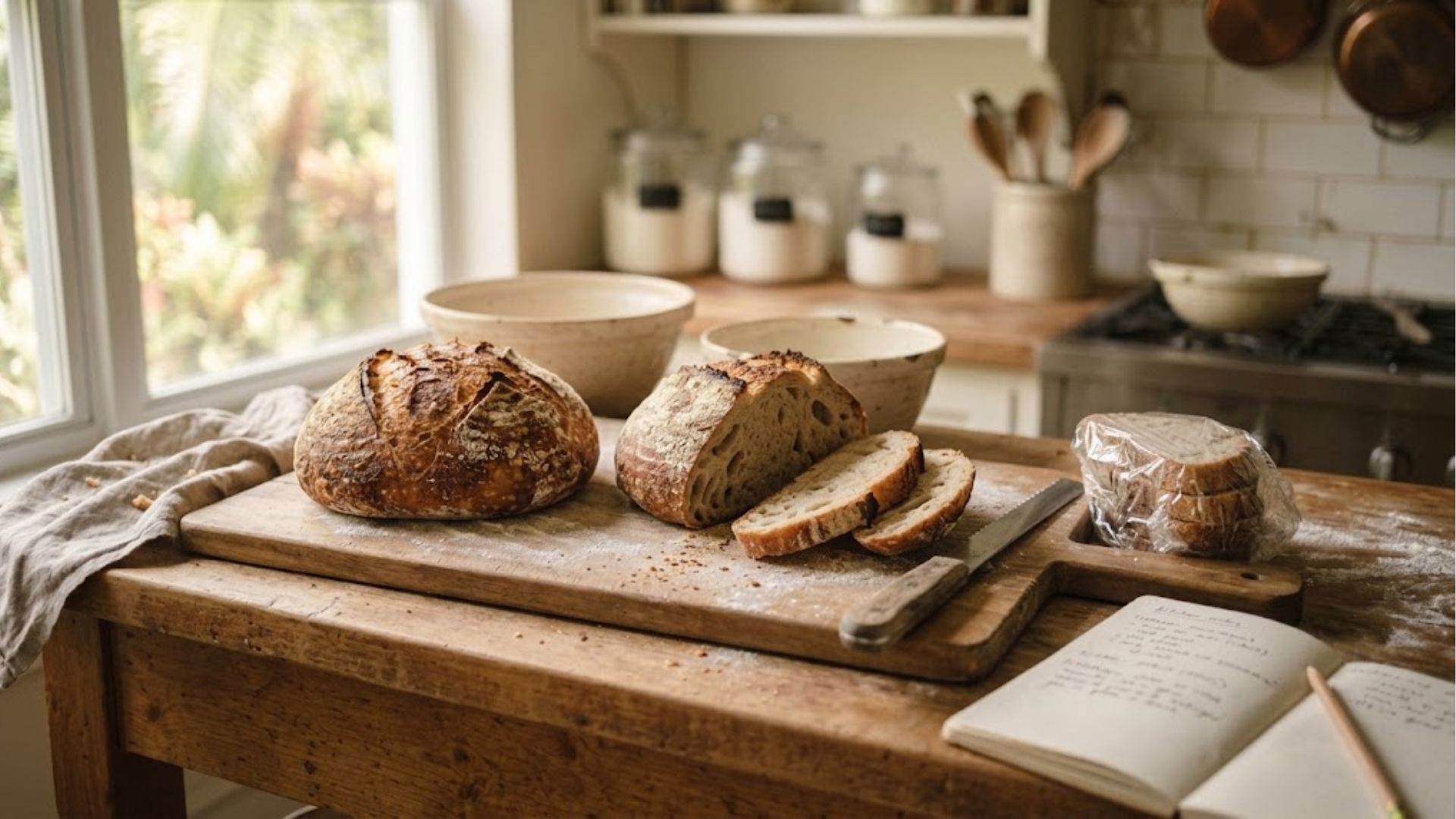
That is exactly what a meal-prep bake day does. You mix a double batch once, shape two loaves, bake them back to back, and set the second one up to last. Here is how to run it.
The Short Answer
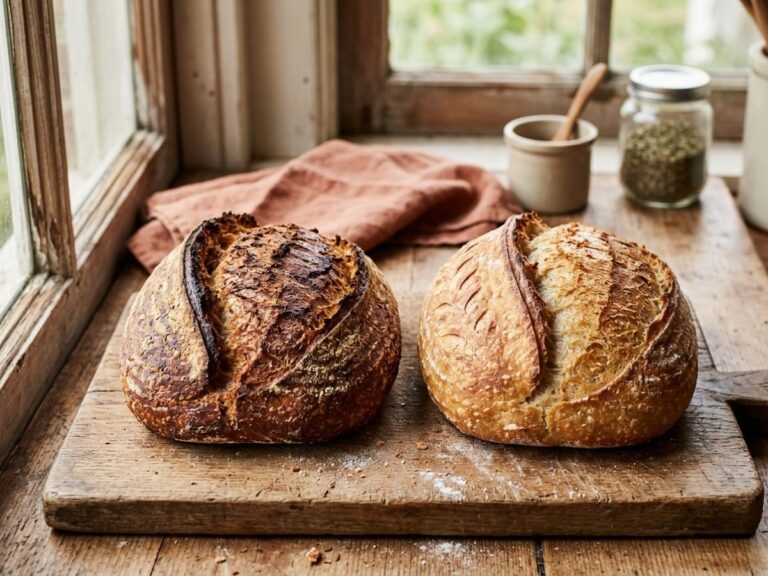
Mix a double batch of dough (about 1 kg of flour in total) in a single session, ferment it together, and divide and shape two loaves. Bake one right away. Either bake the second the next morning after a cold proof, or bake both and freeze one, ideally sliced, so you can toast what you need. One round of feeding, mixing and cleaning supplies you with bread for the whole week.
Why a Meal-Prep Bake Day Works
- Less cleanup. One mixing session and one round of dishes.
- Less waiting around. You are managing one fermentation, not two.
- Less waste. A loaf you will not eat this week goes straight into the freezer, fresh.
- A steady rhythm. Once it is part of your weekend, bread becomes as routine as grocery shopping.
Before You Start
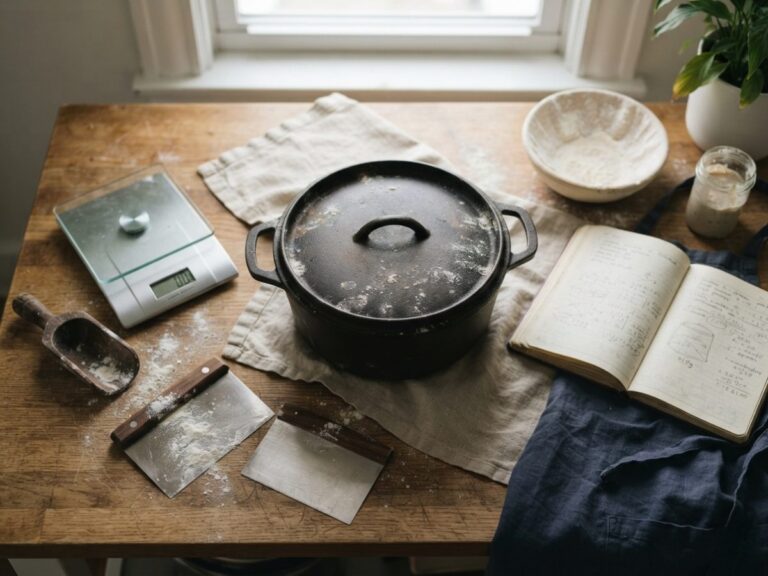
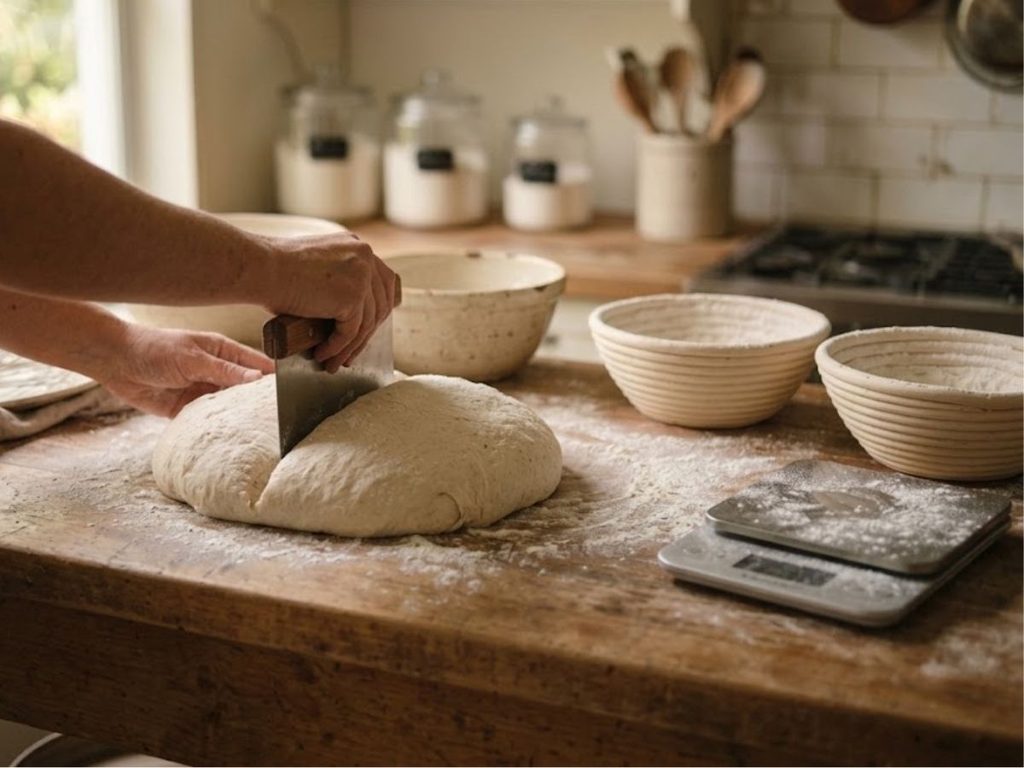
A double batch needs a large enough mixing bowl or tub, a scale, and two bannetons or bowls. If you only own one Dutch oven, you can bake the loaves one after the other, and the timeline below accounts for it. Plan for about 1 kg of flour, 750 g of water, 200 g of ripe levain and 20 g of salt as a starting point, which you can adjust with the Sourdough Calculator.
A Weekend Timeline
| When | What to do | Notes |
| Friday evening | Build your levain | A 1:5:5 build ripens overnight in most kitchens |
| Saturday, 8:00 am | Mix the double batch and rest 30 minutes | Add salt and do the first fold |
| 8:30 am to noon | Four sets of folds, about 45 minutes apart | Then let the dough finish its bulk rise |
| Around noon | Divide the dough and pre-shape | Rest for 20 to 30 minutes |
| 12:30 pm | Shape two loaves | Place both in bannetons |
| Loaf 1 | Proof on the counter for 1 to 2 hours, then bake | Preheat the Dutch oven in the last stretch of the proof |
| Loaf 2 | Fridge overnight, then bake Sunday morning, or bake right after Loaf 1 | Let the Dutch oven reheat for 10 to 15 minutes between bakes |
↔ Swipe to see all columns
Storing the Extra Loaf
- Sliced and frozen: cool the loaf completely, slice it, and freeze the slices flat in a bag. Toast them straight from frozen.
- Whole and frozen: wrap tightly and freeze. Thaw at room temperature, then refresh in a hot oven for about 10 minutes.
- On the counter: a loaf is at its best for about two to three days, stored cut side down on a board or in a bread bag.
Using One Oven for Two Loaves
If you only have one Dutch oven, bake the loaves sequentially. Let the oven come back up to temperature between loaves, and leave the second dough in the fridge to slow its proof while the first one bakes. A cold dough is firm and scores beautifully, which is a bonus.
Desi’s Note
If baking two loaves feels like too much, try one loaf and a batch of something else from the same dough, such as a pizza crust or flatbread. The meal-prep idea is the same: one session, several things for the week.
Adjusting the Plan
- Small household: make a double batch, but freeze one loaf as soon as it cools, so nothing goes stale.
- Hot kitchen: shorten the bulk and consider a cold proof for both loaves. Our Florida schedule guide helps.
- Busy weekend: try the cold-bulk schedule, which lets you mix on one day and shape on another.
Related Reading
- Plain Sourdough Loaf
- Sourdough Sandwich Bread
- Which Sourdough Schedule Fits Your Life?
- Plan Backwards: Time Your Sourdough So It Is Ready When You Are
One bake day, two loaves, and a week of bread that is already taken care of.
More Resources
Looking for a printable reference? Browse all six Printable Quicksheets, or dial in your own numbers with the Sourdough Calculator.
Knead to Know?
New recipes and sourdough troubleshooting, delivered before your starter even finishes its next rise.
Get the latest insights with no spam, just new recipes and baking tips. Unsubscribe anytime. See our Privacy Policy.