Sourdough in a Cool Kitchen: How to Schedule Slow Winter Fermentation
Sourdough bakers in warm places complain that everything happens too fast. If your kitchen runs cool, you have the opposite problem. The dough sits there. The starter barely moves. The recipe says four hours and you are still waiting at ten.
Nothing is wrong with your starter or your technique. Fermentation is driven by temperature, and a cool kitchen simply slows everything down. Once you plan for that, a cold kitchen can be an advantage.
The Short Answer
Below roughly 70 degrees F, fermentation slows noticeably, and in a kitchen around 65 degrees the bulk rise can take two to three times as long as in a warm one. You can fix it by warming the dough, with warm water, a warm spot or a bigger levain, or by embracing the slowness with a longer schedule. Go by how the dough looks and feels rather than the time in the recipe.
What Temperature Does to Fermentation
Wild yeast and bacteria work fastest in a warm range, around the upper 70s F, and slow down as it cools. A common rule of thumb is that fermentation speed roughly doubles for each 15 to 17 degrees F of warmth, which means a kitchen 15 degrees cooler can take about twice as long.
| Dough temperature or kitchen | Rough bulk time | What you will notice |
| 78 degrees F | About 3.5 to 4.5 hours | Quick and lively |
| 75 degrees F | About 4 to 5.5 hours | The comfortable middle |
| 72 degrees F | About 4.5 to 7 hours | Noticeably slower |
| 68 degrees F | About 8 to 10 hours | Plan to use most of a day |
| 65 degrees F | About 10 to 14 hours | Overnight territory |
↔ Swipe to see all columns
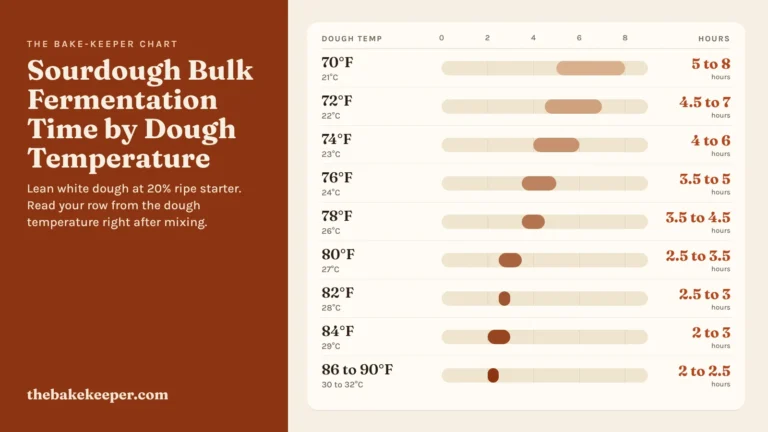
These times assume about 20% levain and a moderately hydrated dough. They are rough guides and should never replace what you see in the bowl, because your starter’s strength and your flour also change the answer. Kitchen running warmer than 78 degrees F? Our bulk fermentation time by temperature chart covers 70 to 90 degrees F.
Warm Your Dough, Not Just the Room
- Use warm water. Mixing with water around 85 to 90 degrees F gives the dough a head start. Do not use hot water, which can harm the yeast.
- Use a bigger levain. Moving from 20% to 25 or 30% levain speeds things up.
- Use a ripe, active starter. In winter, a starter that is a little past peak can be sluggish.
- Mix a little longer. The friction from mixing adds a touch of warmth.
Find or Make a Warm Spot
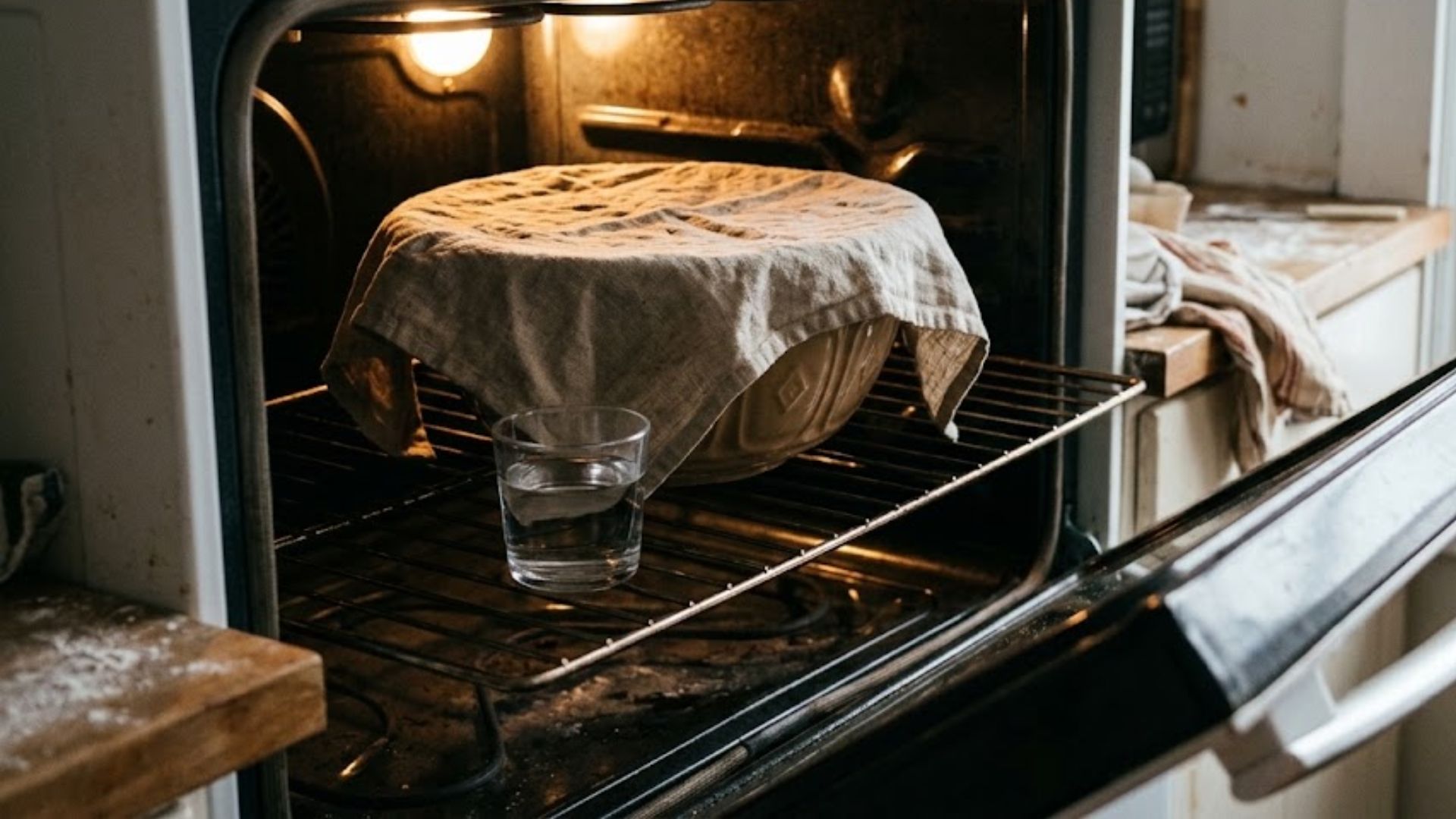
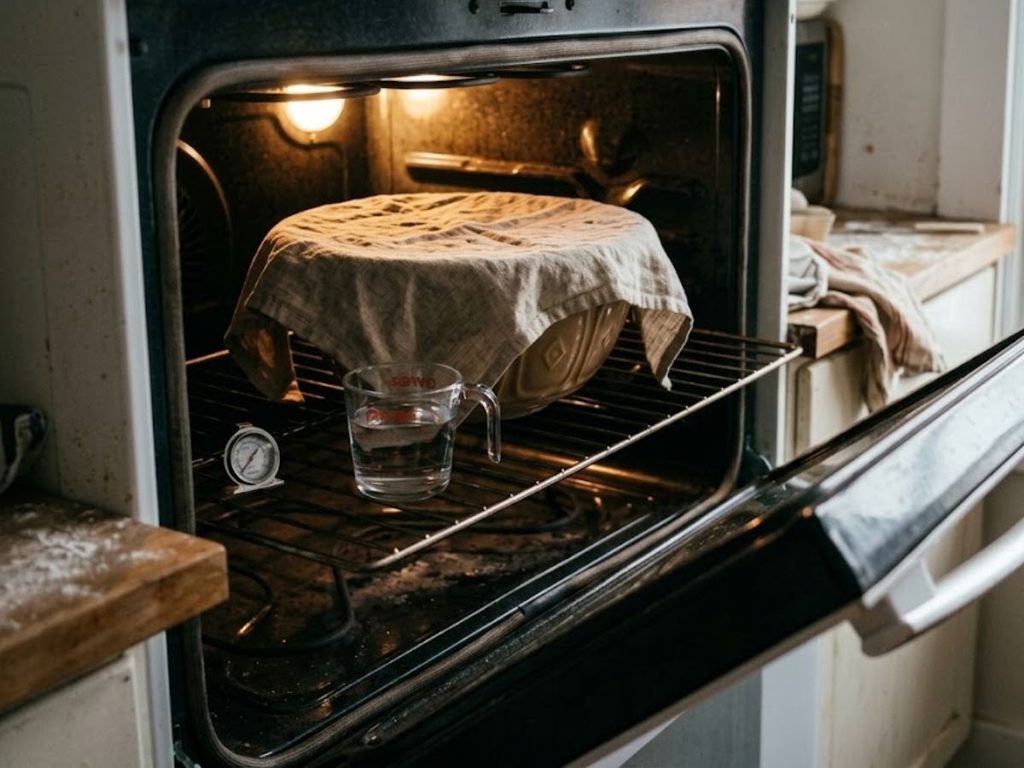
- The oven with the light on. Keep it off, and just leave the light on. Check the temperature with a thermometer first, because some ovens get too warm.
- The microwave with a cup of hot water. The closed space holds the warmth well.
- A cooler with a jar of warm water. It makes a simple DIY proofing box. The oven version is explained step by step in our humidifier guide.
- Near, but not on, a warm appliance. A spot near the fridge top or a warm stove is fine, but do not put dough directly on a heat source.
- A warm water bath. Set your bowl or container in a larger bowl of warm water, and refresh it from time to time.
Slow Down on Purpose
Sometimes the best answer to a cool kitchen is to use it. A cool room is a gentle environment for a long, slow bulk fermentation. Cut the levain to about 10% and let the dough work overnight on the counter, and you may wake up to a dough that is ready to shape. This works particularly well if your kitchen holds steady at around 65 degrees.
Desi’s Note
If you bake in Florida, a cool snap is the only time of year you will meet this problem, and it can come as a surprise after months of fast dough. When a cold front arrives, give your dough extra time and a warmer spot. Our Florida schedule guide covers the other side, when heat compresses everything.
Reading the Dough Instead of the Clock
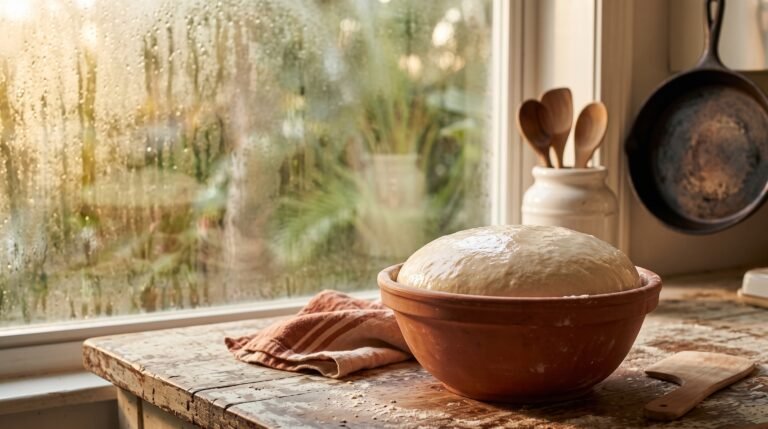
In a cool kitchen, the clock is the least reliable tool you have. Look for a rise of about 50 to 75% in the container, a domed surface with bubbles, a jiggly, airy feel when you shake it, and edges that pull away from the bowl. Those signs matter far more than the hour.
Keeping Your Starter Happy in the Cold
A cool kitchen slows your starter too. Feed it at a smaller ratio, such as 1:1:1, so it peaks sooner, keep it in a warm spot, and use whole wheat or rye in the feed to give it a boost. See Which Flour to Feed Your Starter and Feeding Ratios Explained.
Related Reading
- Hydration and Climate: The Two Numbers That Control Your Fermentation Time
- How Florida Heat Compresses Your Sourdough Schedule
- Dense, Gummy, or Sticky Sourdough?
- The Cold-Bulk Schedule
A cool kitchen runs a slower clock, and you can plan around it.
More Resources
Looking for a printable reference? Browse all six Printable Quicksheets, or dial in your own numbers with the Sourdough Calculator.
Knead to Know?
New recipes and sourdough troubleshooting, delivered before your starter even finishes its next rise.
Get the latest insights with no spam, just new recipes and baking tips. Unsubscribe anytime. See our Privacy Policy.