
Gluten-Free Sourdough Dinner Rolls
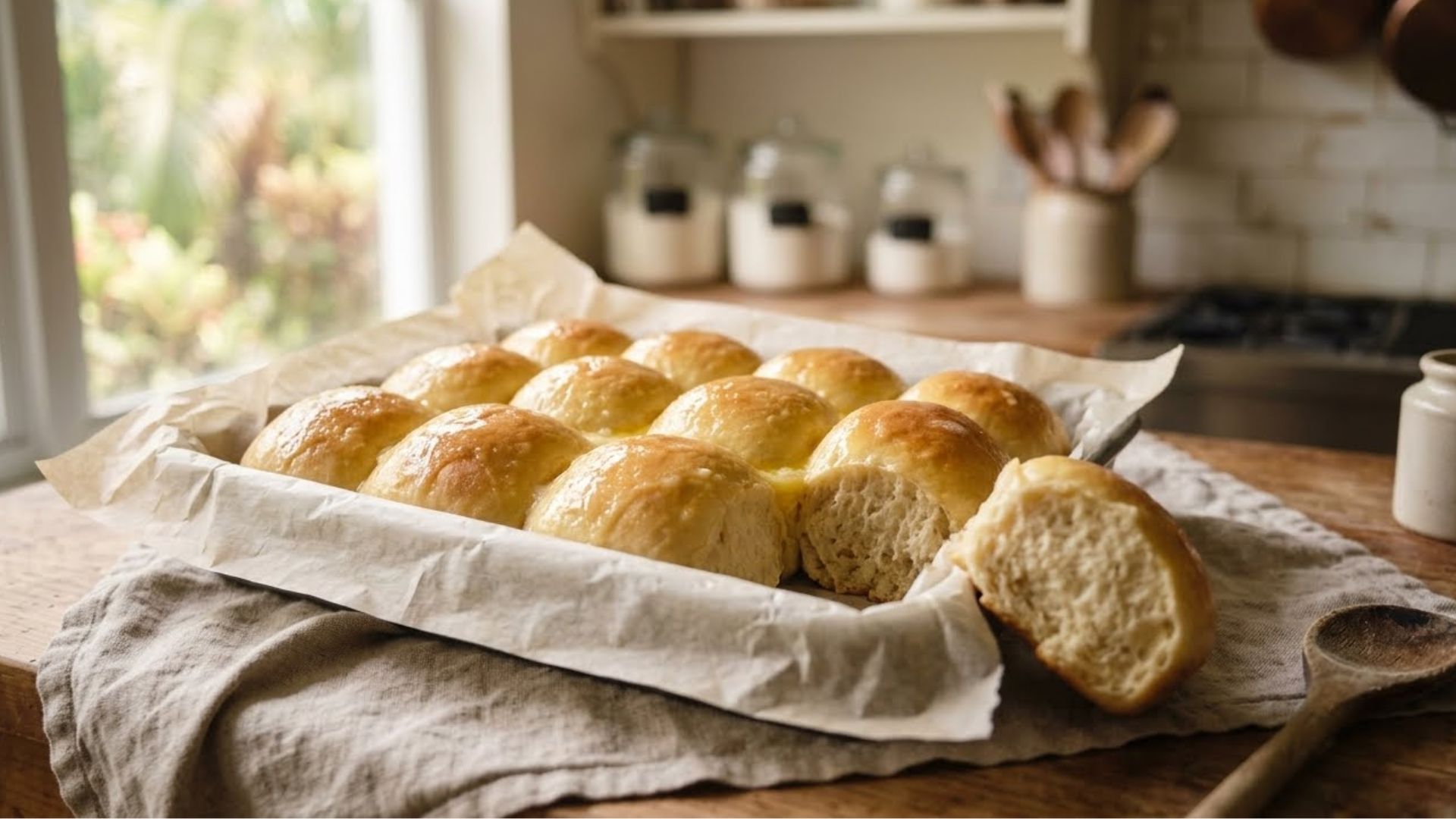
Dinner rolls are where gluten-free bread usually falls short, because the soft, stretchy crumb depends on gluten. Milk and butter soften the crumb here, and psyllium husk gives the dough enough structure to hold a round shape.
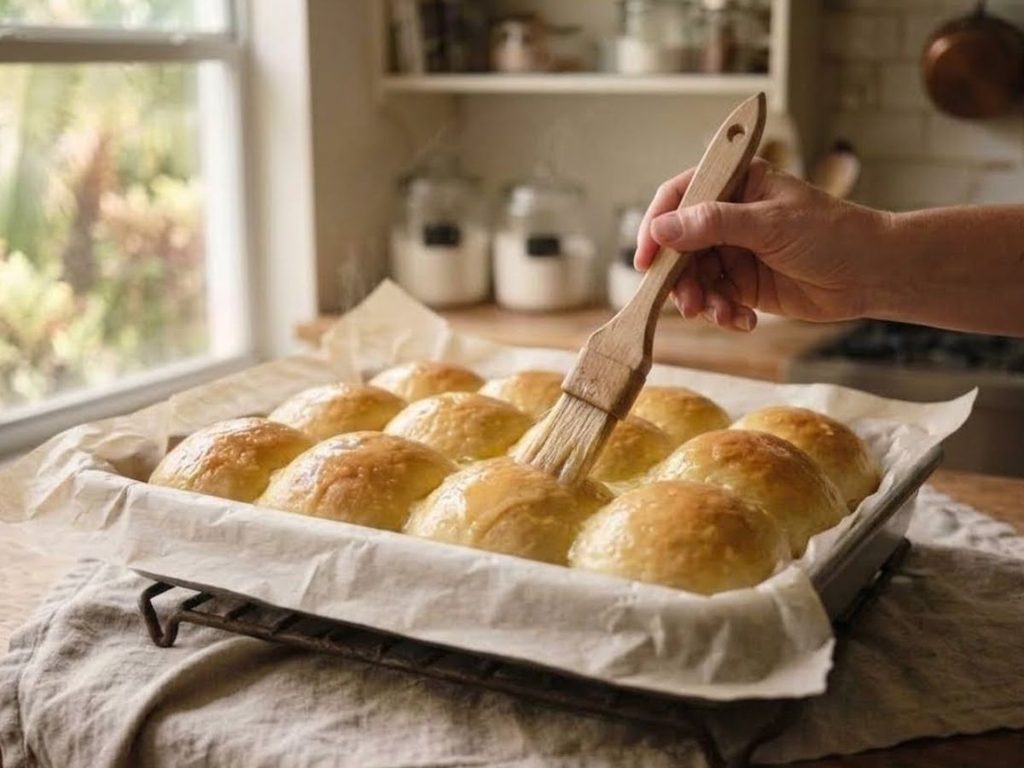
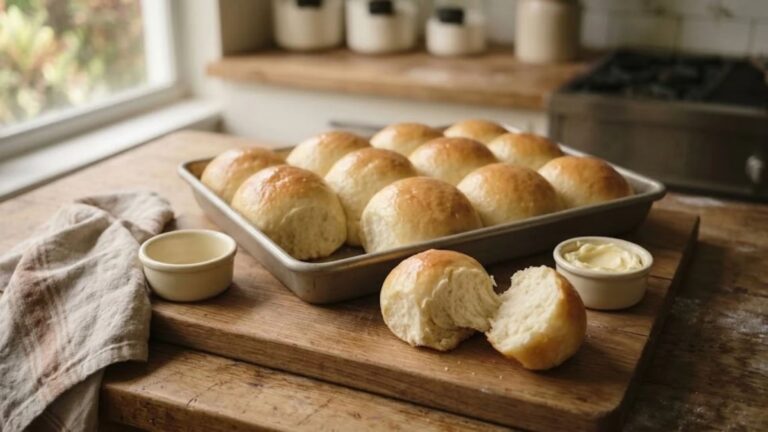
The rolls bake touching in one pan, which keeps their sides soft and helps them rise up instead of out. Brush them with butter while they are still hot.
Research-backed recipe. The amounts and times follow methods published by several gluten-free bakers, written here as an original recipe inside the ranges those methods share. Treat the times as a range, and let the look of the rolls make the call.
A note on celiac disease and shared kitchens. This kitchen also bakes wheat sourdough, so I cannot promise that these recipes are safe for celiac disease. They are written for gluten-free and gluten-sensitive bakers. If you have celiac disease, bake in your own gluten-free setup and read every ingredient label for a gluten-free certification. Ask your doctor what is right for you.
Which one is this?Compare all 3 dinner roll recipes
These 3 dinner roll recipes are close cousins. Here is how they differ, so you can pick the right one.
- Japanese Milk Bread Rolls2 hr 53 min · Makes 12 rolls
A tangzhong dough raised with instant yeast and no starter, brushed with egg wash.
You have no starter and want a soft milk bread roll.
- Hot Honey Cheddar Pull-Apart13 hr 55 min · Makes 12 rolls
Bread flour dough with cheddar baked in, finished with a hot honey chipotle butter.
You want a savory roll for the table.
- Gluten-Free Sourdough RollsYou are here5 hr 25 min · Makes 12 rolls
Psyllium gel with brown rice and sorghum flours, tapioca starch and an active gluten-free starter, with melted butter.
You bake gluten-free.
Why You’ll Love It
- Soft, pull-apart rolls from a dough you shape with wet hands
- Baked in one pan, so there is no spacing and no transferring
- Mostly waiting, with about 25 minutes of hands-on time
- Freezer friendly, and they reheat in minutes
Ingredients
Volume measurements are included for convenience, but they’re approximate. A kitchen scale will always get you a more consistent result, especially for the flours and the starter.
- Whole psyllium husk (16 g): The binder. Use whole husks and not powder.
- Whole milk, warm (270 g / about 1 cup plus 2 Tbsp): Keep it under 110°F (43°C). It gels the psyllium and softens the crumb.
- Honey (25 g / about 1 Tbsp plus 1 tsp): Feeds the starter and sweetens the rolls slightly.
- Gluten-free sourdough starter, active (150 g / about ½ cup plus 3 Tbsp): A bubbly starter gives the best rise.
- Brown rice flour (110 g / about ⅔ cup plus 1 Tbsp): The whole-grain base.
- Sorghum flour (90 g / about ⅔ cup): Adds body and flavor.
- Tapioca starch (100 g / about ¾ cup plus 1 Tbsp): Softens the crumb and adds a little chew.
- Egg (1 large): Enriches the dough and helps it hold together.
- Unsalted butter, melted and divided (55 g / 4 Tbsp): 40 g goes in the dough and 15 g is brushed on after baking.
- Fine sea salt (8 g / 1¼ tsp): Seasons the rolls.
Equipment
Gear guides: Sourdough Equipment Guide·Kitchen Scales·Banneton Sizing·Scoring Tools·Storing the Loaf·Pizza Stone vs. Baking Steel·Shop All Picks →
- Kitchen scale: weigh the flours, the starter and each portion of dough.
- Mixing bowl: for gelling the psyllium and mixing the dough.
- Whisk: mixes the psyllium gel smooth.
- 9×13-inch baking pan: holds all 12 rolls so they rise together.
- Parchment paper: lines the pan so the rolls lift out in one piece.
- Pastry brush: spreads the melted butter over the hot rolls.
- Instant-read thermometer: confirms the rolls are baked through.
- Cooling rack: lets the rolls cool without steaming the bottoms.
Sample Schedule (Same Day)
Mix
- Gel the psyllium in warm milk
- Stir together the dough
Rise
- Rest 3 hours at room temperature
- Shape, then rise 1 to 1½ hours
Bake
- Bake about 30 minutes
- Brush with butter and cool
Gluten-Free Sourdough Dinner Rolls
Method
- Whisk the psyllium husk and honey into the warm milk and let it gel for 5 minutes.
- Stir in the starter, egg and 40 g of the melted butter, then the brown rice flour, sorghum flour, tapioca starch and salt, until smooth.
- Cover and let the dough rise at room temperature for 3 hours, until puffy.
- Line the pan with parchment. With wet hands, divide the dough into 12 pieces of about 72 g, smooth each into a ball and set them in the pan.
- Cover and let the rolls rise for 1 to 1½ hours, until puffy and touching. Heat the oven to 375°F (190°C) for the last 20 minutes.
- Bake for 28 to 32 minutes, until golden and the center of a roll reads 205°F (96°C).
- Brush the hot rolls with the remaining 15 g of melted butter. Cool on a rack for 30 minutes.
Notes
Save This Recipe
Get it emailed to you now, plus new recipes as they go up.
Your email is safe with me. I’ll send this recipe straight over. No spam, ever. You can unsubscribe anytime.
How to Make It
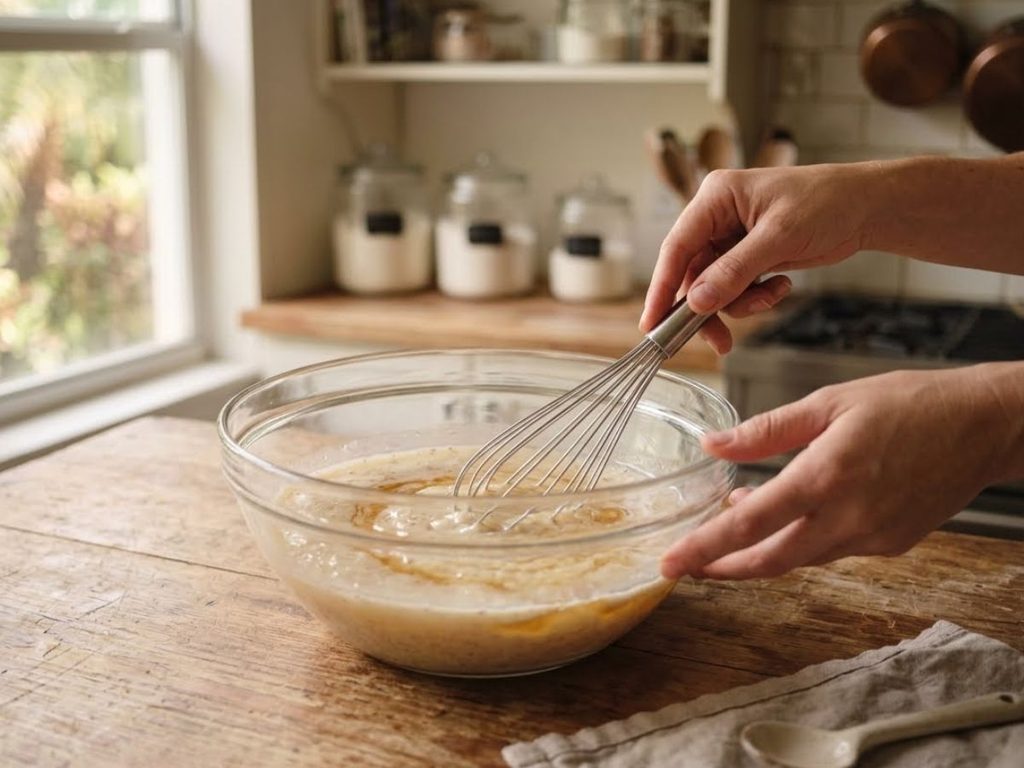
1Gel the psyllium. Whisk the psyllium husk and honey into the warm milk and let it sit for 5 minutes until thick. Keep the milk below 110°F (43°C) so it does not harm the starter.
2Mix the dough. Stir in the starter, egg and 40 g of the melted butter, then the brown rice flour, sorghum flour, tapioca starch and salt, until no dry streaks remain. The dough will be soft and sticky, closer to a thick batter than a bread dough.

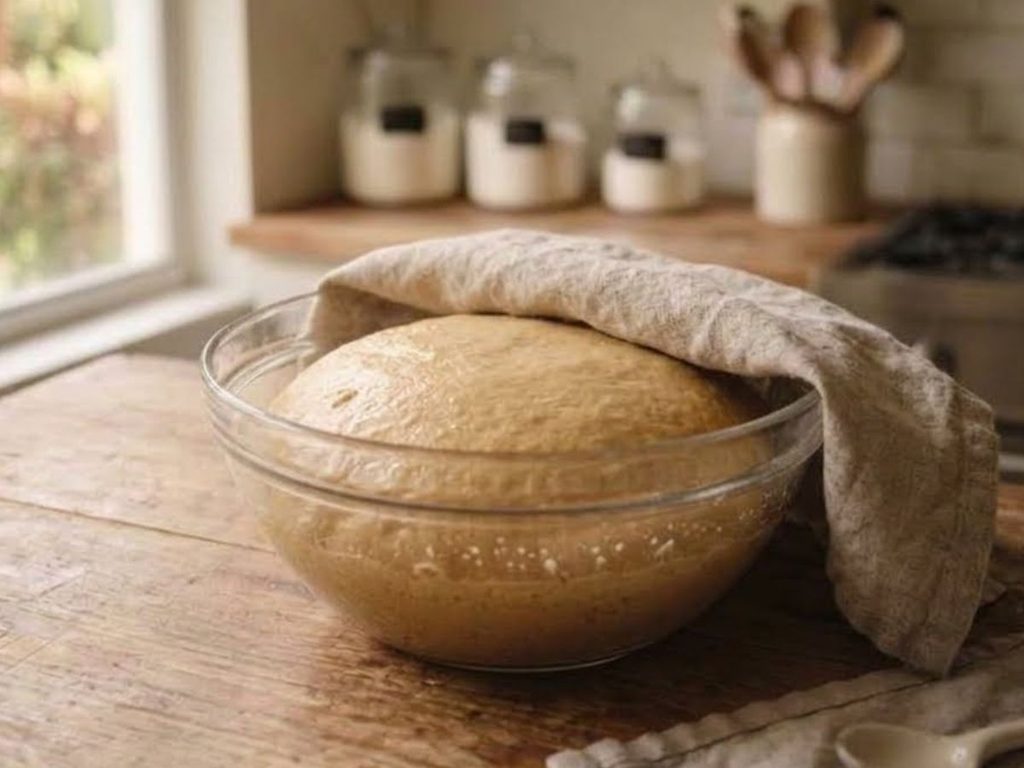
3Let it rise. Cover the bowl and let the dough rise at room temperature for about 3 hours, until puffy and full of small bubbles. It will not double the way wheat dough does.
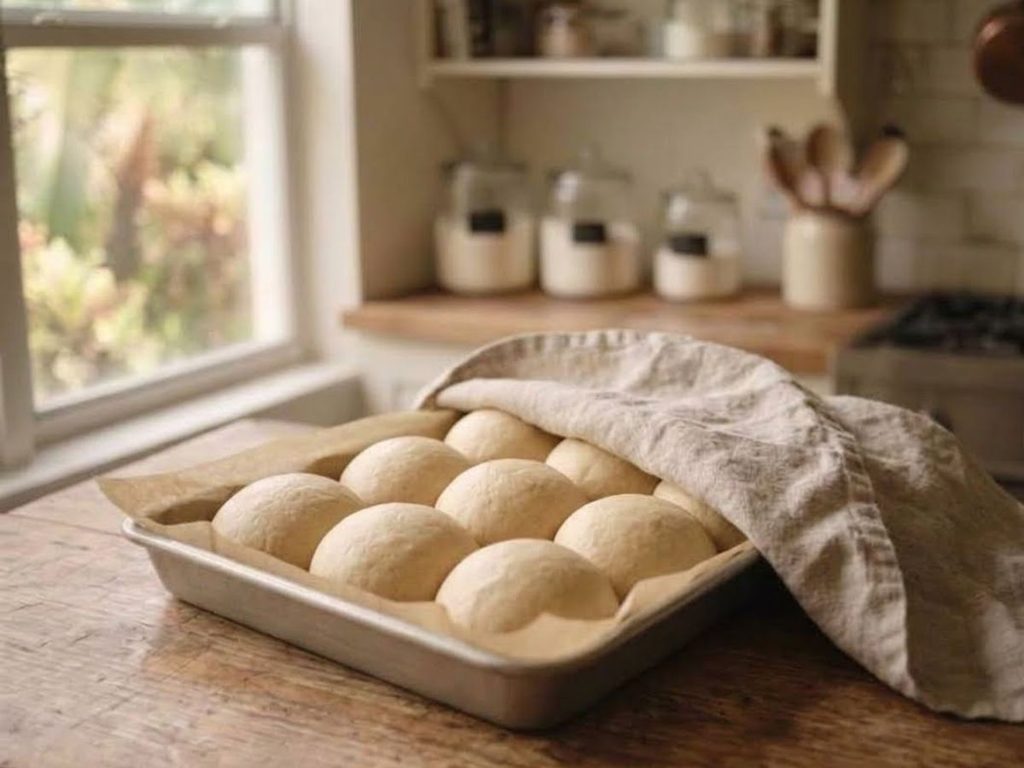
4Shape the rolls. Line the 9×13-inch pan with parchment. With wet hands, divide the dough into 12 pieces of about 72 g each, smooth each into a ball and set them in the pan in 3 rows of 4, almost touching.

5Let the rolls rise. Cover the pan and let the rolls rise for 1 to 1½ hours, until they look puffy and are touching. Heat the oven to 375°F (190°C) with a rack in the center for the last 20 minutes of the rise.
6Bake. Bake for 28 to 32 minutes, until the tops are golden and the center of a roll reads 205°F (96°C). If the tops brown before the centers are done, move the pan to a lower rack.

7Brush and cool. Brush the hot rolls with the remaining 15 g of melted butter. Lift the rolls out by the parchment, set them on a cooling rack and let them cool for 30 minutes before pulling them apart.
Tips & Troubleshooting
- Dense rolls: Use an active starter, and let the pan rise finish. The rolls should look puffy and touch each other.
- Gummy centers: Bake to 205°F (96°C), and cool the rolls for 30 minutes before tearing them apart.
- Sticky dough: Wet your hands and keep a small bowl of water nearby. Extra flour changes the texture.
- Pale tops: Brush them with butter after baking, or add 3 minutes to the bake.
How to Store
To store: Keep cooled rolls in a bag at room temperature for 1 day, then refrigerate them for up to 4 days. Warm them in a 350°F (175°C) oven for 8 minutes.
To freeze: Freeze the cooled rolls for up to 2 months and reheat them from frozen at 350°F (175°C) for 12 to 15 minutes.
Nutrition
Nutrition values are estimates per roll and will vary based on exact ingredients used.
173
CALORIES
29
CARBS (G)
3
PROTEIN (G)
6
FAT (G)
3
SAT. FAT (G)
2.3
FIBER (G)
3.5
SUGAR (G)
276
SODIUM (MG)
Desi’s Notes
Published gluten-free sourdough roll methods share a wet dough and a pan bake, with psyllium husk for structure, and this recipe stays inside those ranges. If your kitchen is warm, the pan rise can finish in an hour, so check the rolls at 45 minutes.
The rolls are another home for an active Gluten-Free Sourdough Starter. For a sandwich loaf, try the Gluten-Free Sourdough Pan Loaf, and find the rest of the set on the Gluten-Free Sourdough page.
Before You Bake
Scaling this recipe up or down? Run your numbers through the Sourdough Calculator. And if you want a printable reference for troubleshooting or timing, browse all six Printable Quicksheets.
New to sourdough? Start with the free course
Seven short lessons over 12 days, from mixing your first starter to baking your first loaf with it. Stop anytime.
One short lesson every couple of days. Seven in all, then you’re done. No spam. See our Privacy Policy.
Already have a starter? Bake your first loaf → · Already baking? Browse recipes →


Tried this recipe? Leave a star rating below. It takes 10 seconds and helps other bakers decide what to make next.
Baked this recipe your way? Share it in Community Bakes and inspire other readers.