
Sourdough Discard Skillet Cornbread
A full cup of discard goes into this cornbread, and it earns its place. The acid in the discard reacts with the baking soda for lift, and it tenderizes the crumb the same way buttermilk does. The butter browns in the skillet while the oven heats, so the edges fry as the batter hits the pan.
It sits on the sweeter side of the line, with 40 g of sugar for the whole skillet. Serve it next to chili, or bake a day early and crumble it into the Sourdough Bread Stuffing for a cornbread version.
Why You’ll Love It
- Uses 240 g of discard in one bake.
- Crisp, buttery edges from a preheated cast iron skillet.
- Mixed in 15 minutes while the oven heats, with no rise time.
- Tender inside without tasting sour. The baking soda takes care of that.
Ingredients
Discard at any age works here, straight from the refrigerator. Medium-grind yellow cornmeal gives the best texture. Fine cornmeal makes a cakier crumb, and coarse stone-ground cornmeal stays gritty unless you let the batter rest 10 minutes before baking.
- Unsalted butter (85 g (6 tablespoons)): browned in the skillet, then most of it goes into the batter.
- Sourdough discard (240 g (about 1 cup)): acid for tenderness and lift, plus mild tang.
- Buttermilk (120 g (½ cup)): more acid and moisture.
- Eggs (100 g (2 large)): bind the batter and help it set.
- Medium-grind yellow cornmeal (150 g (about 1 cup)): the corn flavor and the slightly rustic texture.
- All-purpose flour (120 g (1 cup)): keeps the crumb from crumbling apart.
- Granulated sugar (40 g (about 3 tablespoons)): light sweetness and browning. Cut to 15 g for a more savory cornbread.
- Baking powder (8 g (2 teaspoons)): the main lift.
- Baking soda (3 g (½ teaspoon)): reacts with the acid in the discard and buttermilk.
- Fine salt (6 g (1 teaspoon)): seasons the cornmeal.
Equipment
Gear guides: Sourdough Equipment Guide·Kitchen Scales·Banneton Sizing·Scoring Tools·Storing the Loaf·Pizza Stone vs. Baking Steel·Shop All Picks →
- Kitchen scale: for weighing the discard and the dry ingredients.
- 10-inch cast iron skillet: the hot iron is what crisps the edges.
- Two mixing bowls: one for the dry ingredients and one for the wet.
- Whisk: for mixing the discard smoothly into the buttermilk and eggs.
- Oven mitts: the skillet handle is over 400°F (200°C) when it comes out.
- Instant-read thermometer: confirms the center is baked through.
Sample Schedule
Day 1
- Brown the butter as the oven heats, about 15 minutes
- Mix the batter
- Bake 18 to 22 minutes
- Rest 10 minutes and serve

Sourdough Discard Skillet Cornbread
Method
- Put the butter in a 10-inch cast iron skillet in the cold oven and heat to 425°F (220°C) until the butter is golden brown, about 15 minutes.
- Whisk the cornmeal, flour, sugar, baking powder, baking soda and salt in a large bowl.
- Whisk the discard into the buttermilk until smooth, then whisk in the eggs.
- Whisk most of the browned butter into the wet ingredients, leaving 1 tablespoon to coat the skillet. Stir into the dry ingredients just until combined and pour into the hot skillet.
- Bake 18 to 22 minutes until golden and a toothpick in the center comes out clean.
- Rest 10 minutes in the skillet, then cut into 8 wedges.
Notes
Save This Recipe
Get it emailed to you now, plus new recipes as they go up.
Your email is safe with me. I’ll send this recipe straight over. No spam, ever. You can unsubscribe anytime.
How to Make It
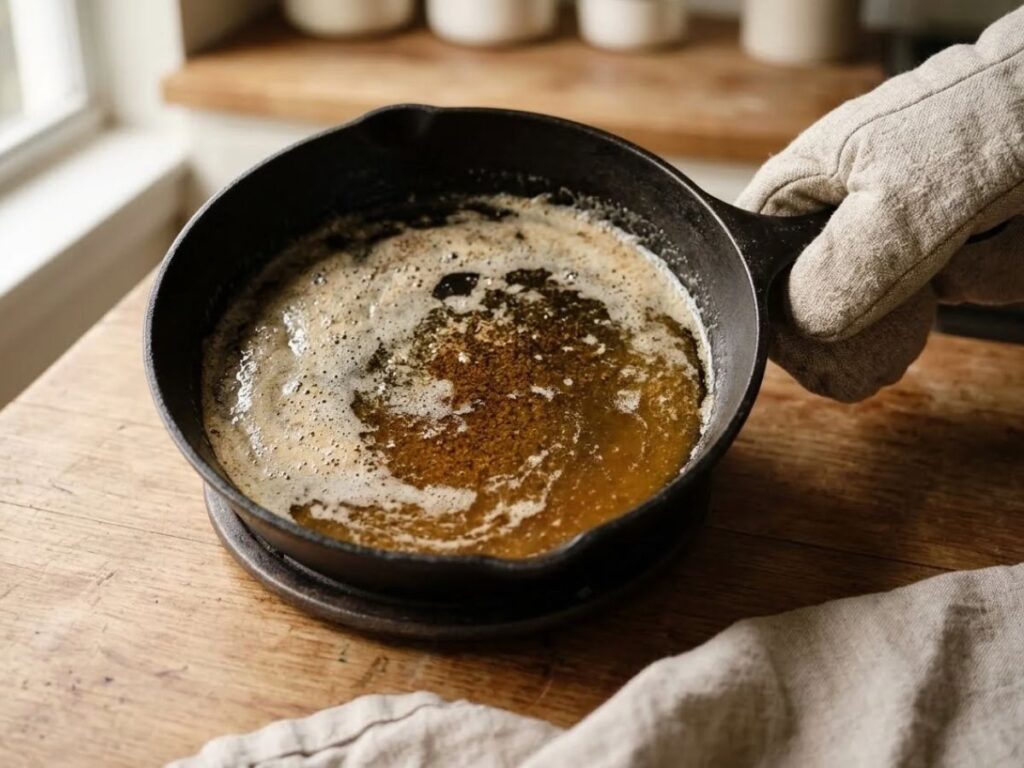
1Brown the butter in the skillet. Put the butter in the cast iron skillet, set the skillet in the cold oven and heat the oven to 425°F (220°C). Over the next 15 minutes or so the butter melts and turns golden brown, with darker specks on the bottom. Take the skillet out when it smells nutty, before the specks turn black.
2Whisk the dry ingredients. While the butter browns, whisk the cornmeal, flour, sugar, baking powder, baking soda and salt together in a large bowl so the leaveners are spread evenly.
3Mix the wet ingredients. In a second bowl, whisk the discard into the buttermilk until no lumps remain, then whisk in the eggs. Thick discard takes a minute of whisking to loosen, so keep going until the mixture looks like pancake batter.
4Combine and pour. Pour all but about 1 tablespoon of the browned butter into the wet ingredients and whisk it in, then swirl the last tablespoon around the skillet to coat the sides. Stir the wet mixture into the dry with a spatula just until no dry streaks remain. Pour the batter into the hot skillet. It should sizzle at the edges.

5Bake. Bake for 18 to 22 minutes, until the edges are dark brown and pulling away from the pan and a toothpick in the center comes out clean. The center should read about 200°F (93°C).
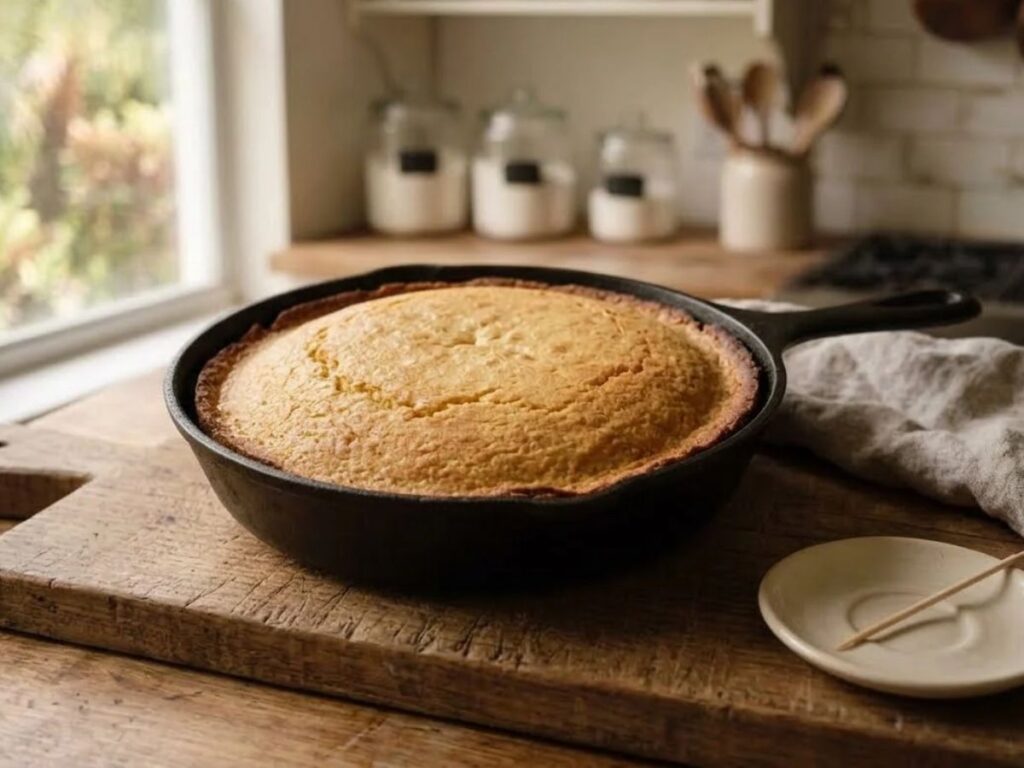
6Rest and serve. Let the cornbread rest in the skillet for 10 minutes so the crumb sets, then cut it into 8 wedges. Serve it warm with butter or honey.
Tips & Troubleshooting
- Cornbread is dry and crumbly: it baked too long. Start checking at 18 minutes, since the hot skillet keeps cooking it after it comes out.
- Edges are soft instead of crisp: the skillet was not hot enough when the batter went in. Make sure the butter has browned and the batter sizzles.
- Bitter or soapy aftertaste: too much baking soda for the amount of acid. Weigh the soda, since a heaped ½ teaspoon is easy to overdo.
- Gritty texture: the cornmeal is coarse stone-ground. Let the batter rest 10 minutes before pouring so the cornmeal can soften.
How to Store
To store: Wrap leftover cornbread and keep it at room temperature for up to 2 days. In a humid kitchen, refrigerate it after the first day and warm wedges in a 350°F (175°C) oven for 8 minutes.
To freeze: Freeze wrapped wedges for up to 2 months. Thaw at room temperature and warm before serving, or crumble them straight into stuffing.
Nutrition
Nutrition is estimated per wedge, for 8 wedges, and will vary with the exact ingredients used.
295
CALORIES
43
CARBS (G)
7
PROTEIN (G)
11
FAT (G)
6
SAT. FAT (G)
2
FIBER (G)
6
SUGAR (G)
530
SODIUM (MG)
Desi’s Notes
This recipe is Research-backed and has not been through a Bake-Keeper kitchen test yet. The method follows the classic browned-butter skillet technique, with the leavening set for the extra acid that a full cup of discard brings.
Making stuffing with it? Bake the cornbread a day ahead, cut it into 1-inch cubes and leave them out uncovered overnight. Dry cubes soak up broth without turning to paste.
Before You Bake
Scaling this recipe up or down? Run your numbers through the Sourdough Calculator. And if you want a printable reference for troubleshooting or timing, browse all six Printable Quicksheets.
New to sourdough? Start with the free course
Seven short lessons over 12 days, from mixing your first starter to baking your first loaf with it. Stop anytime.
One short lesson every couple of days. Seven in all, then you’re done. No spam. See our Privacy Policy.
Already have a starter? Bake your first loaf → · Already baking? Browse recipes →



Tried this recipe? Leave a star rating below. It takes 10 seconds and helps other bakers decide what to make next.
Baked this recipe your way? Share it in Community Bakes and inspire other readers.