Make-Ahead Sourdough Dinner Rolls
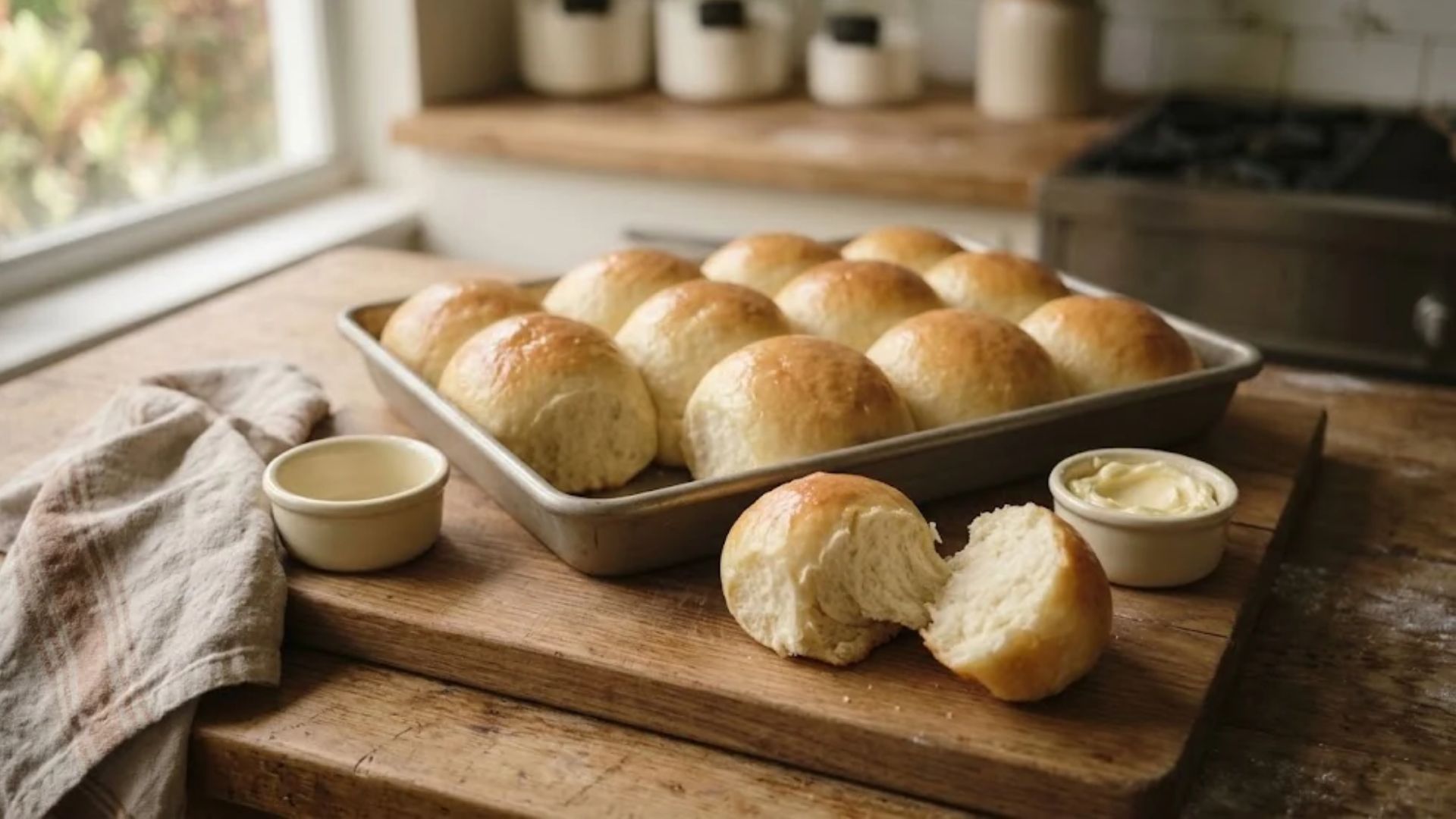
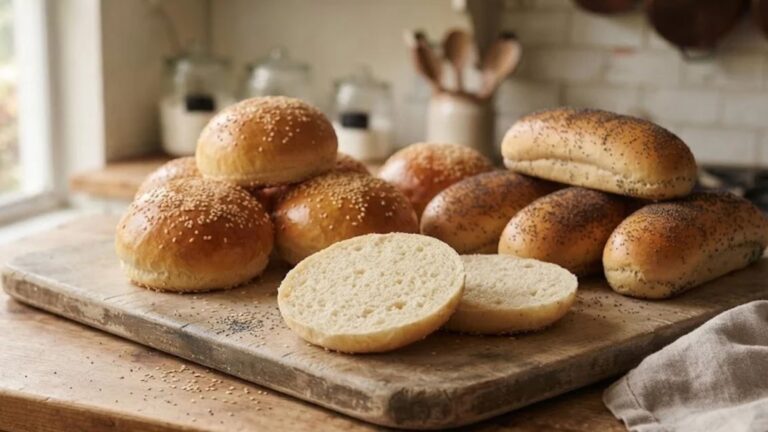
Holiday ovens get crowded. The turkey wants it, and the pies were supposed to be done yesterday. These rolls step out of that line. You bake them now until they are just set and still pale, freeze them, and on the day they go straight from the freezer into a 425°F (220°C) oven for about 12 minutes.
The dough is a soft enriched sourdough, rich with milk and butter, and an active starter does the rising instead of commercial yeast. If you would rather serve them the same day, the recipe covers that too. Read the Holiday Sourdough Schedule if you are planning the rest of the bread basket around them.
Why You’ll Love It
- The oven is free on Thanksgiving Day. Twelve minutes from frozen and the rolls are on the table.
- Soft, pull-apart rolls with a mild tang that plays well with gravy and leftover turkey.
- No commercial yeast. An active starter does all of the lifting.
- One dough, two timelines. Bake them fully today or par-bake and freeze for up to 6 weeks.
Ingredients
Use an active starter that has doubled within 4 to 8 hours of its last feeding, at 100% hydration. Weigh the dough pieces too. Rolls of the same weight finish baking at the same time, which matters more when they go in frozen.
- Active sourdough starter, 100% hydration (100 g (about ½ cup)): the only leavening, so it needs to be bubbly and recently fed.
- Whole milk, lukewarm (230 g (about 1 cup)): hydrates the dough and keeps the crumb soft.
- Egg (50 g (1 large)): adds structure and a richer crumb.
- Honey (25 g (about 1 tablespoon)): a little sweetness and better browning on the final bake.
- Bread flour (450 g (about 3¾ cups)): the higher protein gives the rolls enough strength to hold their shape through a freeze.
- Fine salt (9 g (about 1½ teaspoons)): seasons the dough and steadies fermentation.
- Unsalted butter, softened (56 g (4 tablespoons)): kneaded in last for a tender, pull-apart crumb.
- Unsalted butter, melted, for brushing (15 g (1 tablespoon)): brushed on right after the final bake for shine.
Equipment
Gear guides: Sourdough Equipment Guide·Kitchen Scales·Banneton Sizing·Scoring Tools·Storing the Loaf·Pizza Stone vs. Baking Steel·Shop All Picks →
- Kitchen scale: for weighing the ingredients and the 12 dough pieces evenly.
- Stand mixer or large mixing bowl: for mixing and kneading the enriched dough.
- 9×13-inch metal baking pan: the rolls proof, bake and freeze together in it.
- Bench scraper: for dividing the dough into even pieces.
- Instant-read thermometer: confirms the par-bake and the final bake by internal temperature.
- Pastry brush: for brushing the baked rolls with melted butter.
- Wire rack: for cooling the par-baked rolls completely before they go in the freezer.
- Gallon freezer bags: for storing the par-baked rolls airtight in the freezer.
Sample Schedule
Day 1
- Feed the starter in the morning
- Mix the dough once the starter has doubled
- Bulk ferment, 4 to 6 hours
- Shape and proof, 2 to 3 hours
- Par-bake, cool and freeze
Thanksgiving Day
- Bake from frozen at 425°F (220°C), 10 to 14 minutes
- Brush with butter and serve
Make-Ahead Sourdough Dinner Rolls
Method
- Stir the starter into the lukewarm milk until dissolved, then whisk in the egg and honey. Add the flour and salt and knead for 5 minutes by machine or 8 minutes by hand.
- Knead in the softened butter a tablespoon at a time, then knead 6 to 8 minutes more until smooth and glossy.
- Cover and let rise at 75 to 78°F (24 to 26°C) for 4 to 6 hours, until about 75% larger.
- Divide into 12 pieces of about 77 g each, roll into tight balls and set them in a buttered 9×13-inch pan in 3 rows of 4.
- Cover and proof for 2 to 3 hours until puffy and touching, or refrigerate overnight and give them 1½ to 2 hours at room temperature.
- Bake at 375°F (190°C) for 20 to 24 minutes to serve today, or par-bake at 300°F (150°C) for 25 to 30 minutes until set and 185°F (85°C) inside but still pale.
- Cool completely, about 1 hour, freeze until firm, then seal in freezer bags for up to 6 weeks.
- Bake the frozen rolls at 425°F (220°C) for 10 to 14 minutes until deep golden, then brush with melted butter.
Notes
Save This Recipe
Get it emailed to you now, plus new recipes as they go up.
Your email is safe with me. I’ll send this recipe straight over. No spam, ever. You can unsubscribe anytime.
How to Make It
1Mix the dough. In a large bowl or the bowl of a stand mixer, stir the active starter into the lukewarm milk until it fully dissolves and the milk looks cloudy. Whisk in the egg and honey. Add the bread flour and salt and mix until no dry flour remains. Knead for 5 minutes by machine on low or 8 minutes by hand. The dough will be firm and a little shaggy at this point, which is what you want before the butter goes in.
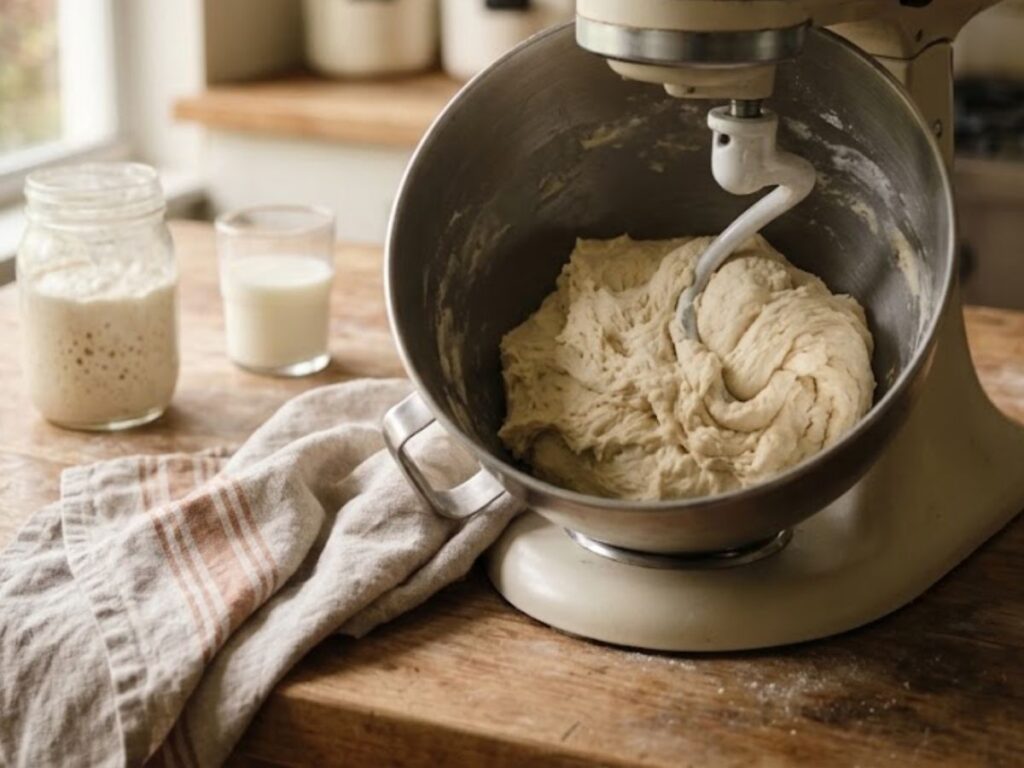
2Knead in the butter. Add the softened butter a tablespoon at a time, letting each piece disappear before adding the next. Keep kneading for another 6 to 8 minutes until the dough turns glossy and pulls away from the sides of the bowl. A thin piece should stretch until you can almost see light through it. Aim for a dough temperature of 76 to 78°F (24 to 26°C).
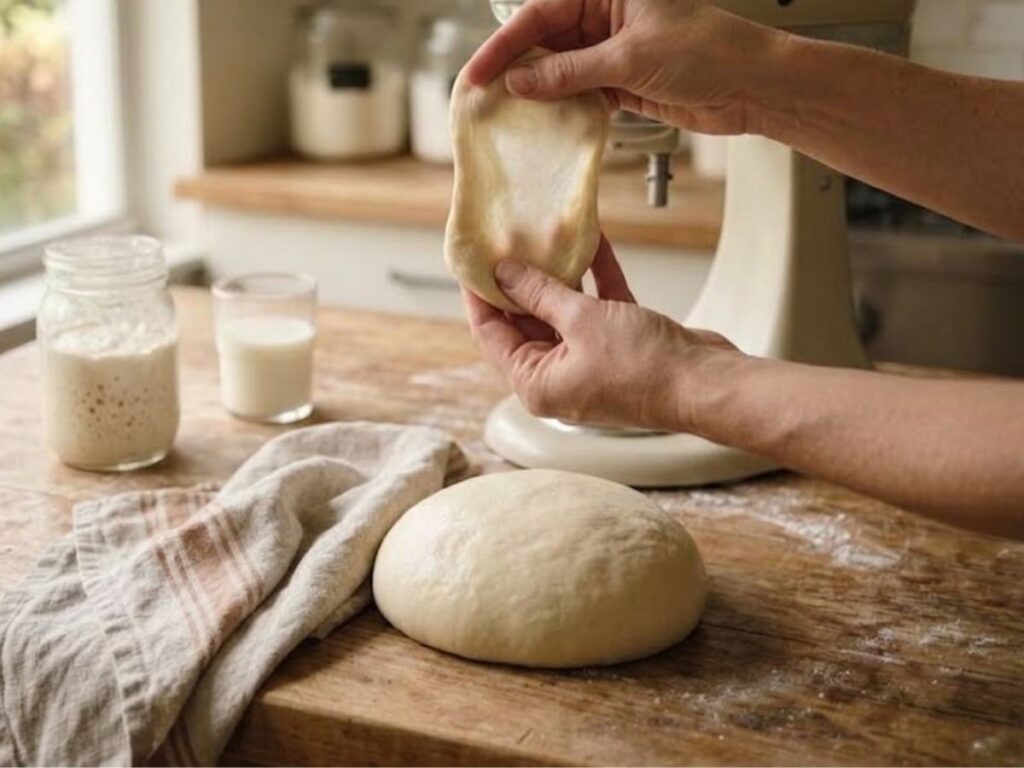
3Bulk ferment. Cover the bowl and let the dough rise at 75 to 78°F (24 to 26°C) for 4 to 6 hours, until it has grown about 75% and looks domed and airy. Butter and egg slow a starter down, so expect this to take longer than a lean loaf. In a warm South Florida kitchen around 80°F (27°C), start checking at 3½ hours.
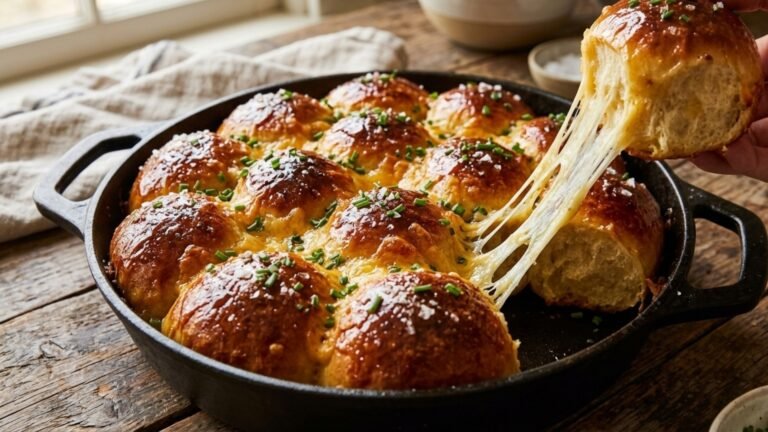
4Divide and shape. Turn the dough onto an unfloured counter and divide it into 12 pieces of about 77 g each. Cup your hand over each piece and roll it against the counter in small circles until it forms a tight, smooth ball with the seam underneath. Set the rolls in a buttered 9×13-inch metal pan in 3 rows of 4, leaving small gaps between them so they bake into each other as they rise.
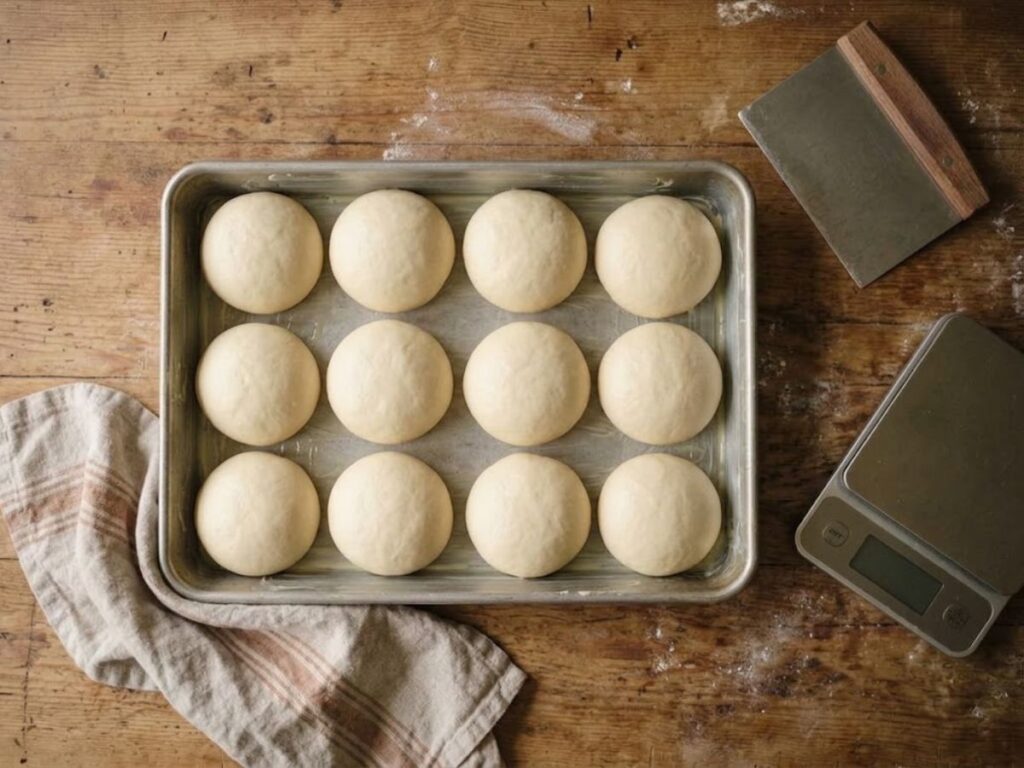
5Final proof. Cover and proof at room temperature for 2 to 3 hours, until the rolls are puffy and touching, and the dough springs back slowly when pressed. For a later bake, cover the pan and refrigerate it overnight after shaping, then let it sit at room temperature for 1½ to 2 hours before baking.
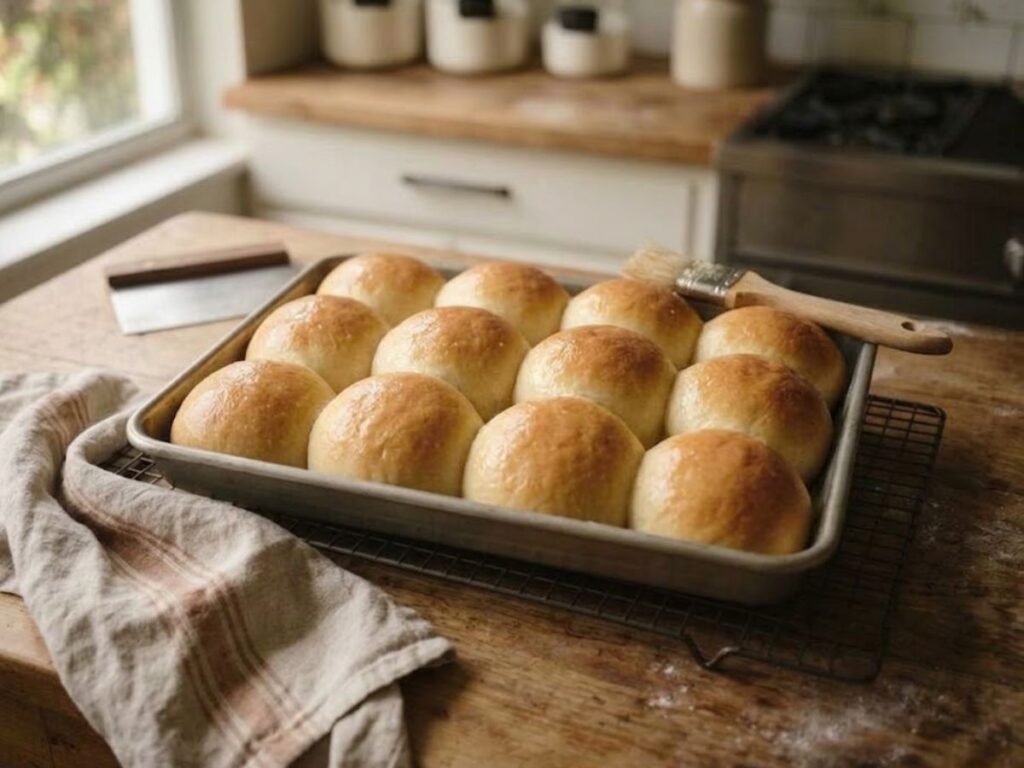
6Bake or par-bake. To serve today, bake at 375°F (190°C) for 20 to 24 minutes, until deep golden and 190°F (88°C) in the center roll. To make ahead, par-bake at 300°F (150°C) for 25 to 30 minutes instead. The rolls should be fully set and read 185°F (85°C) inside, but stay pale on top with only a hint of color. That pale crust is what browns later.

7Cool and freeze. Cool the par-baked rolls completely on a wire rack, about 1 hour. Freeze them in the pan, uncovered, for 1 hour until firm, then lift the slab out, pull the rolls apart if you like and seal them in freezer bags with the air pressed out. They keep for up to 6 weeks.
8Bake from frozen on the day. Heat the oven to 425°F (220°C). Set the frozen rolls back in the pan or on a parchment-lined sheet, no thawing needed, and bake for 10 to 14 minutes, until deep golden and hot all the way through. Brush the tops with the melted butter right away and serve warm.
Tips & Troubleshooting
- Rolls stayed dense and small: the starter was past its peak or the kitchen was cool. Feed it so it doubles within 4 to 8 hours and keep the dough near 76°F (24°C) during bulk.
- Tops browned during the par-bake: the oven runs hot or the rolls baked too long. Drop to 285°F (140°C) next time and pull them at 185°F (85°C) inside.
- Bottoms got soggy after freezing: the rolls went into the bags while still warm. Cool them a full hour so no steam is trapped.
- Centers cold after the final bake: the rolls were packed tightly in a cold pan. Spread them on a sheet or give them 2 to 3 extra minutes, checking for 190°F (88°C).
How to Store
To store: Keep fully baked rolls in a sealed bag at room temperature for up to 2 days. In a humid kitchen, check them on day 2 and move them to the refrigerator if the crust turns tacky.
To freeze: Par-baked rolls keep in sealed freezer bags for up to 6 weeks. Bake them straight from frozen at 425°F (220°C) for 10 to 14 minutes.
Nutrition
Nutrition is estimated per roll, for a batch of 12, and will vary with the exact ingredients used.
210
CALORIES
33
CARBS (G)
7
PROTEIN (G)
6
FAT (G)
3
SAT. FAT (G)
1
FIBER (G)
3
SUGAR (G)
305
SODIUM (MG)
Desi’s Notes
This recipe is Research-backed. It follows the brown-and-serve method from bakery practice, where the rolls bake low until the crumb sets and brown later in a hot oven. It has not been through a Bake-Keeper kitchen test yet.
Par-baking at 300°F (150°C) is the step people rush. If the tops brown now, they will be too dark after the final bake, so watch for set and pale rather than golden.
Before You Bake
Scaling this recipe up or down? Run your numbers through the Sourdough Calculator. And if you want a printable reference for troubleshooting or timing, browse all six Printable Quicksheets.
New to sourdough? Start with the free course
Seven short lessons over 12 days, from mixing your first starter to baking your first loaf with it. Stop anytime.
One short lesson every couple of days. Seven in all, then you’re done. No spam. See our Privacy Policy.
Already have a starter? Bake your first loaf → · Already baking? Browse recipes →
Tried this recipe? Leave a star rating below. It takes 10 seconds and helps other bakers decide what to make next.
Baked this recipe your way? Share it in Community Bakes and inspire other readers.