
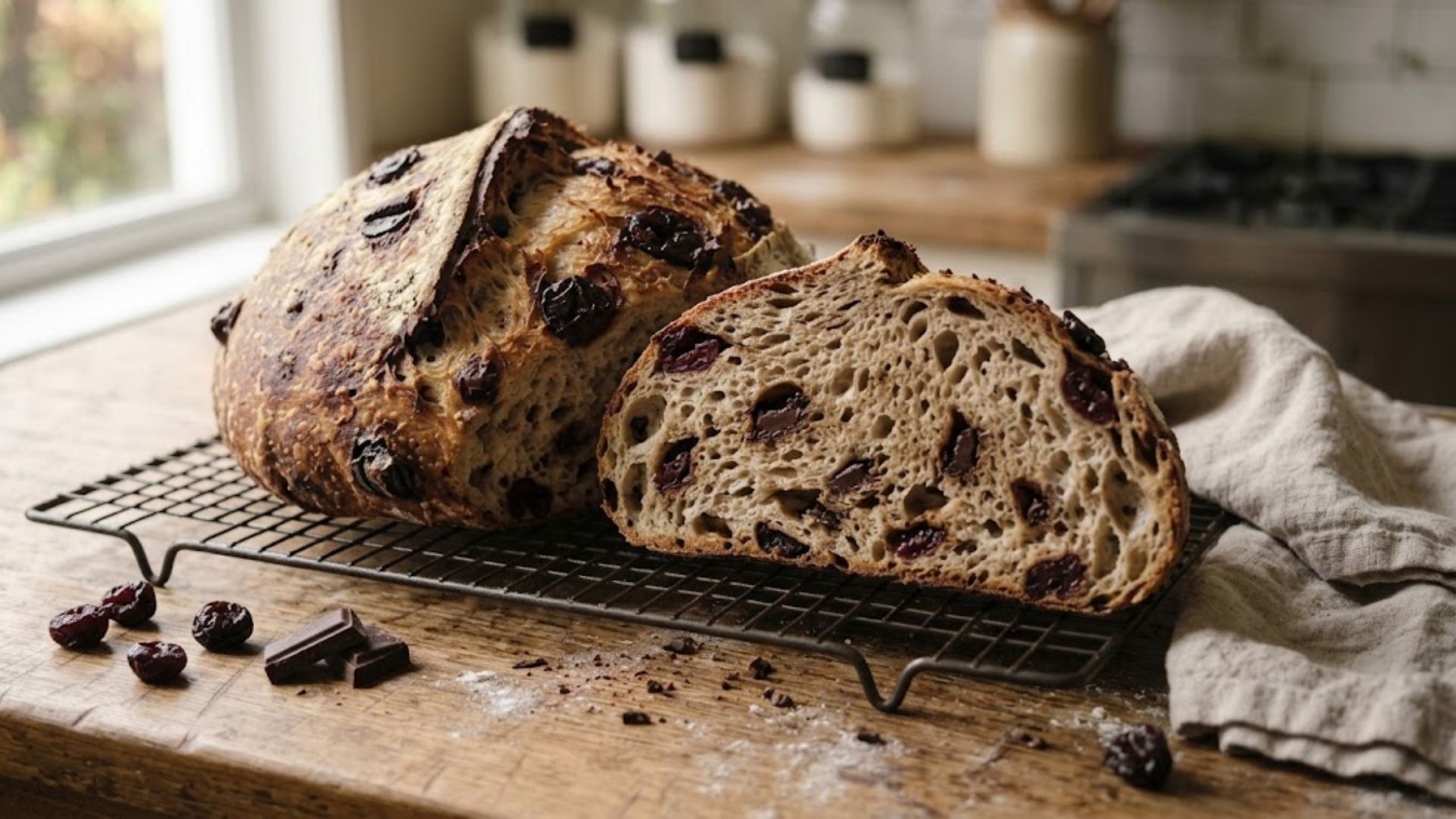
Dark Cherry Chocolate Chunk Sourdough Loaf
Dark cherries and bittersweet chocolate chunks turn the everyday boule into something you would happily serve as dessert. The dough itself stays simple, the same lean base I use for a plain loaf, so if you already have a weekend sourdough rhythm this one slots right in without learning a new technique. Fold the fruit and chocolate in during your usual stretch and fold routine, and the rest of the process barely changes.
Dark cherries lean tart rather than candy sweet, which keeps this loaf from tipping into cake territory, and the chocolate melts into little pockets through the crumb instead of sinking to the bottom. I like a thick slice toasted with salted butter in the morning, though it holds its own with nothing on it at all.
Which one is this?Compare all 15 sourdough loaf recipes
These 15 sourdough loaf recipes are close cousins. Here is how they differ, so you can pick the right one.
- Plain Loaf18 hr 15 min · Makes 1 loaf
Caputo 00 flour and no added fat.
You want the plain everyday loaf.
- No-Dutch-Oven Loaf15 hr 15 min · Makes 12 slices
Bread flour and no added fat, baked on a baking sheet instead of in a Dutch oven.
You want a plain loaf and do not own a Dutch oven.
- Whole Wheat Loaf18 hr 15 min · Makes 1 loaf
Caputo 00 with Caputo integrale and no added fat.
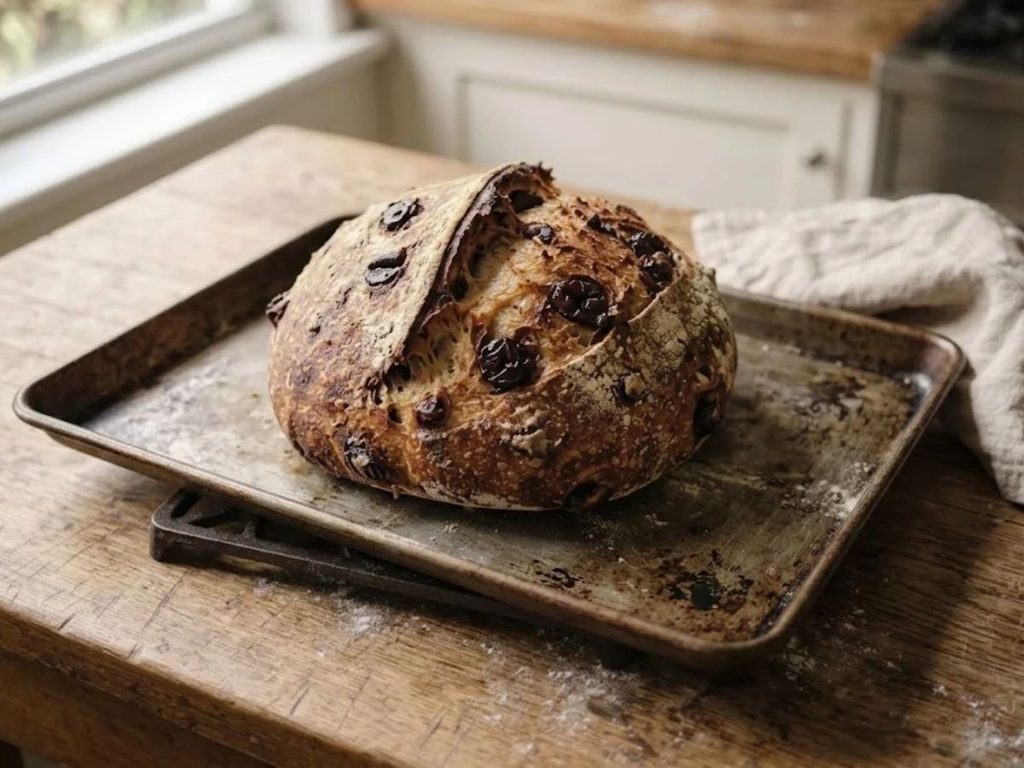
You want more whole grain in an everyday loaf.
- Rye Loaf17 hr 45 min · Makes 1 loaf
Bread flour and dark rye, with no added fat.
You like the flavor of dark rye.
- Olive Oil Loaf15 hr 5 min · Makes 1 loaf
Bread flour with olive oil in the dough.
You like the taste of olive oil in bread.
- Sourdough Sandwich Bread15 hr 3 min · Makes 1 loaf
Bread flour, whole milk, honey and softened butter, rolled up and baked in a loaf pan.
You want a simple sandwich loaf and would skip the tangzhong.
- Milk Bread Loaf16 hr 35 min · Makes 1 loaf
Bread flour with a tangzhong and butter.
You want a soft sandwich loaf.
- Spelt Sandwich Loaf16 hr · Makes 12 slices
Whole spelt and bread flour with butter.
You want a whole grain sandwich loaf.
- Einkorn Hearth Loaf16 hr 30 min · Makes 12 slices
Whole einkorn flour only, with no white flour and no added fat.
You want an all-einkorn loaf.
- Sprouted Whole Wheat Sandwich Loaf17 hr 3 min · Makes 12 slices
Sprouted whole wheat and bread flour.
You want a sprouted whole wheat sandwich loaf.
- Brown Butter Maple Oat Loaf16 hr 45 min · Makes 12 slices
Bread flour, whole wheat and oats, with browned butter and maple.
You want a nutty, lightly sweet loaf.
- Black Sesame Sandwich Loaf7 hr 58 min · Makes 12 slices
Black sesame paste goes into a milk and butter dough, finished with an egg wash and more seeds on top.
You want a nutty, faintly sweet sandwich loaf with black sesame in every slice.
- Pistachio Cardamom Loaf18 hr 25 min · Makes 1 loaf
Ground cardamom in the dough with toasted pistachios folded in.
You want a lightly spiced loaf with nuts in every slice.
- Gluten-Free Pan Loaf5 hr 20 min · Makes 12 slices
Brown rice, sorghum and tapioca flours with olive oil, baked in a pan.
You bake gluten-free.
- Dark Cherry Chocolate Chunk Sourdough LoafYou are here18 hr 25 min · Makes 1 loaf
Why You’ll Love It
- Still a beginner loaf. Same technique as a plain boule, just folded fruit and chocolate into the dough you already know how to make.
- Tart cherries, not candy sweet. Dried tart cherries keep this loaf from reading like dessert bread.
- Pockets of dark chocolate. Chunks melt through the crumb instead of clumping at the bottom of the loaf.
- One bowl, no mixer. Everything comes together by hand with the same stretch and fold method as a plain loaf.
- Freezes in slices. Toast a piece straight from the freezer for breakfast without thawing the whole loaf.
Ingredients
Volume measurements are included for convenience, but they’re approximate. Weigh the flour and the mix-ins both. A loaf this size holds about 185 grams of cherries and chocolate between the folds, and getting that ratio close keeps every slice balanced instead of front-loaded with fruit.
- Bread flour (500 g (about 4 cups)): a stronger flour than an all-purpose gives the dough enough structure to carry the fruit and chocolate without collapsing.
- Water, lukewarm (350 g (about 1½ cups)): dissolves the starter first and brings the dough to about 70% hydration.
- Active sourdough starter (100 g (about ½ cup)): it needs to be bubbly and recently fed before it goes into the water.
- Fine sea salt (10 g (about 1¾ teaspoons)): added with the flour, salt by weight keeps the ratio consistent across brands.
- Dried tart cherries, roughly chopped (100 g (about ¾ cup)): chopping the larger pieces in half means every slice gets some instead of a few lucky bites.
- Dark chocolate, 70% cacao, chopped into chunks (85 g (about ½ cup)): chop a bar yourself rather than using chips, the uneven shards melt into better pockets.
Equipment
Gear guides: Sourdough Equipment Guide·Kitchen Scales·Banneton Sizing·Scoring Tools·Storing the Loaf·Pizza Stone vs. Baking Steel·Shop All Picks →
- Kitchen scale: for weighing the flour and the mix-ins, both matter here.
- Large mixing bowl: for mixing the dough and holding it through bulk fermentation.
- Bench scraper: for handling the dough once the fruit and chocolate make it a little stickier.
- Banneton (proofing basket) with cloth liner: holds the shaped loaf through the overnight cold proof.
- Dutch oven: traps steam the way a professional oven would, giving the crust its blistered finish.
- Lame or a very sharp, thin blade: for a clean score so the loaf opens where you want it to.
- Shower cap or a reusable bowl cover: keeps the dough from drying out between folds.
- Parchment paper: for transferring the dough into the hot Dutch oven.
- Ice cubes (about 4): tucked under the parchment to create steam for the crust.
- Baking sheet: holds the loaf for the final open bake once it leaves the Dutch oven.
- Cooling rack: lets air move under the loaf so the bottom stays crisp.
Sample Schedule (2-Day)
Day 1
- Dissolve the starter in the water
- Mix in the flour and salt
- Rest 30 to 40 minutes
- Stretch and fold, working in the cherries and chocolate on the first round
- Three more rounds of stretch and folds, 30 minutes apart
- Bulk ferment until risen about 50%
- Shape and place in the banneton
- Refrigerate overnight
Day 2
- Preheat the oven with the Dutch oven inside to 475°F
- Score and bake covered 30 minutes, then uncovered 10 minutes
- Finish open on a baking sheet about 5 minutes
- Cool at least 1 hour before slicing
Dark Cherry Chocolate Chunk Sourdough Loaf
Method
- Dissolve the starter into the lukewarm water until no lumps remain.
- Mix in half the flour, add the salt, then mix in the rest of the flour into a shaggy dough.
- Cover and rest 30 to 40 minutes.
- Stretch and fold, folding in the cherries and chocolate as you go. Rest 30 minutes.
- Repeat three more times, for a total of 4 rounds, resting 30 minutes between rounds.
- Bulk ferment until risen about 50% (2 to 3 hours in a warm kitchen).
- Turn out, pre-shape, then shape into a tight boule.
- Transfer to the floured banneton, seam side up, and cover.
- Refrigerate overnight.
- Preheat the oven with the Dutch oven inside to 475°F for at least 30 minutes.
- Score and bake covered 30 minutes, then uncovered 10 minutes.
- Finish on a baking sheet, open, about 5 minutes.
- Cool completely, at least 1 hour, before slicing.
Notes
Save This Recipe
Get it emailed to you now, plus new recipes as they go up.
Your email is safe with me. I’ll send this recipe straight over. No spam, ever. You can unsubscribe anytime.
How to Make It
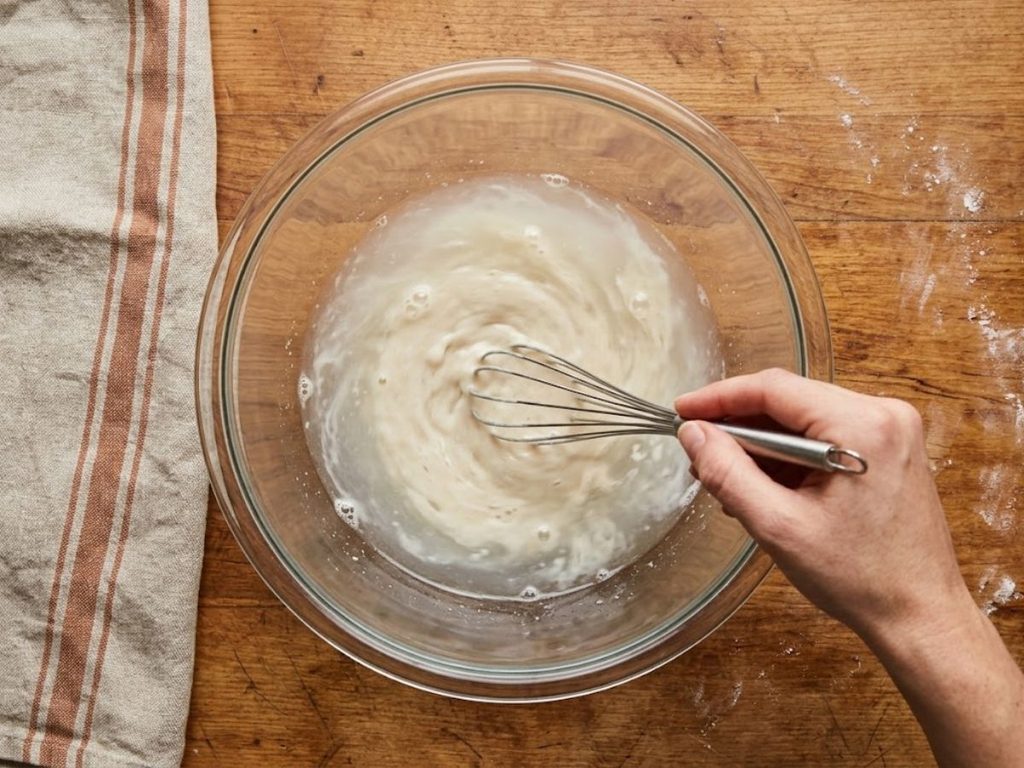
1Dissolve the starter. In a large bowl, dissolve the active starter into the lukewarm water, whisking until no lumps remain. The water should turn faintly cloudy once the starter is fully worked in. If clumps of starter are still visible after a minute of whisking, your starter may be under-fed or too stiff. Let it sit a minute and whisk again before moving on.
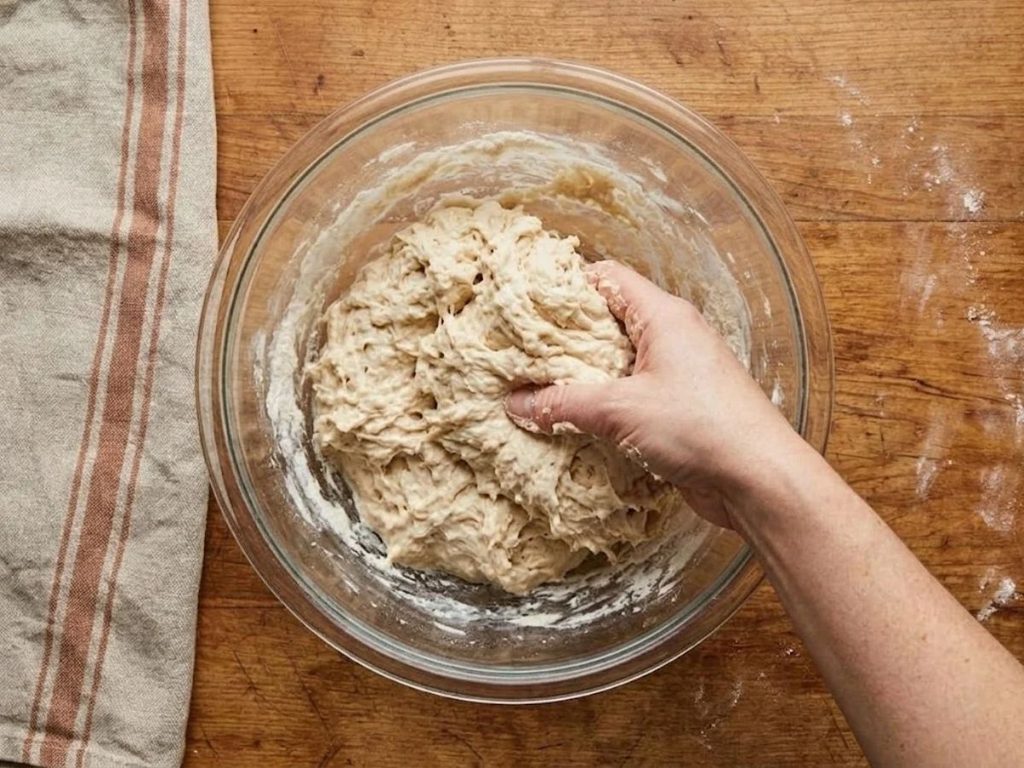
2Mix in the flour and salt. Add about half the flour and mix well, then add the salt, then add the remaining flour and mix until you have a shaggy, sticky dough. This two-stage mix is the same trick used on the plain loaf. Adding salt after the first half of the flour protects the starter’s early activity, since salt dropped in too soon can slow fermentation down. The dough will look rough and uneven here, which is exactly right.
3Rest. Cover the bowl and rest 30 to 40 minutes. This short rest lets the flour fully hydrate before the first stretch and fold, and the dough will feel noticeably smoother afterward. In a humid South Florida kitchen the dough may already look slightly puffed by the end of this rest, which is a good early sign the starter is active.
4First stretch and fold. Pull the dough up at the side of the bowl and fold it toward the center, rotating the bowl to fold every side, then scatter the cherries and chocolate over the top and fold them in the same way. Folding in cold mix-ins can tighten the dough a little, so take it slow and let the fruit and chocolate work into the folds rather than forcing them. A few chocolate shards poking through the surface are normal, they will tuck in on the next rounds. Cover and rest 30 minutes.
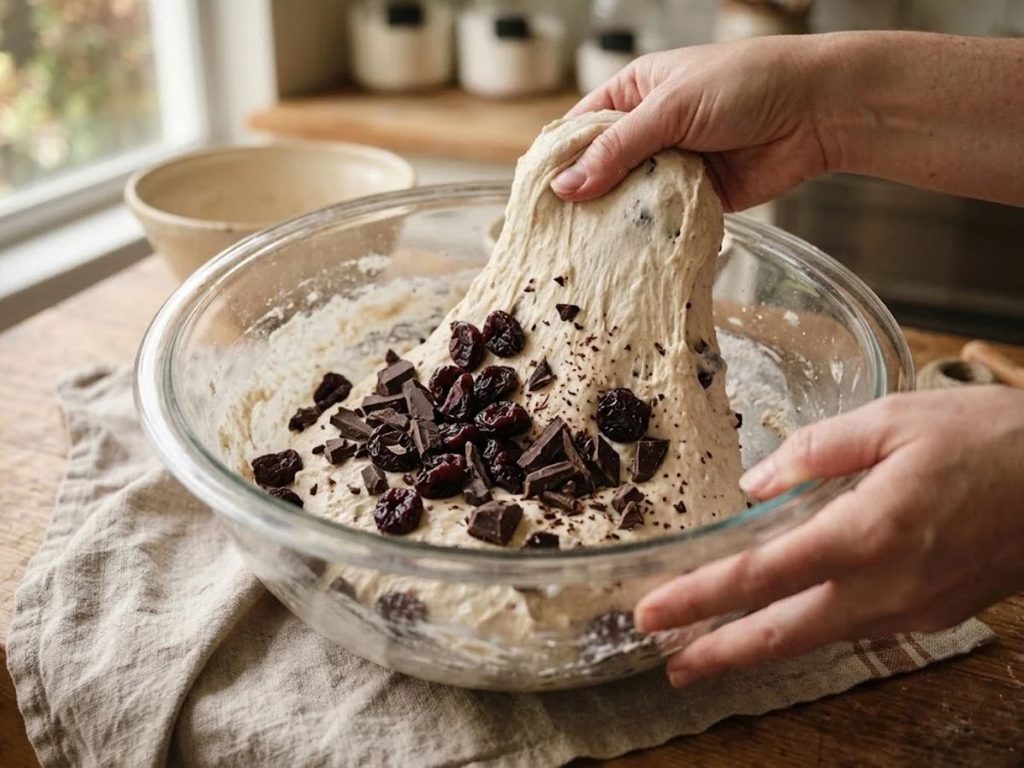
5Repeat three more rounds. Repeat the stretch and fold three more times, for a total of four rounds, resting 30 minutes between each. By the last round the dough should hold together as one cohesive mass instead of shedding loose cherries and chocolate, and it will feel noticeably smoother under your hands. If fruit still falls out easily, give it one more gentle fold before moving on.
6Bulk ferment. Cover the dough and let it ferment on the counter until it has risen about 50%. Watch the rise, not the clock here. In a hot, humid kitchen this usually takes 2 to 3 hours, and going past 50% risks an over-fermented crumb with oversized, uneven holes around the fruit. The cherries add a bit of extra weight, so this dough can sometimes look a touch slower to rise than a plain loaf even at the same temperature.
7Turn out, pre-shape, and shape. Turn the dough onto a floured counter, pre-shape by folding the edges in, then roll it into a tight boule with the seam pinched closed. Work gently near any chocolate chunks sitting close to the surface, pressing too hard can tear the dough and let a chunk poke through the skin. Cup both hands around the dough and drag it toward you in small circles to build surface tension, the same motion as a plain loaf.
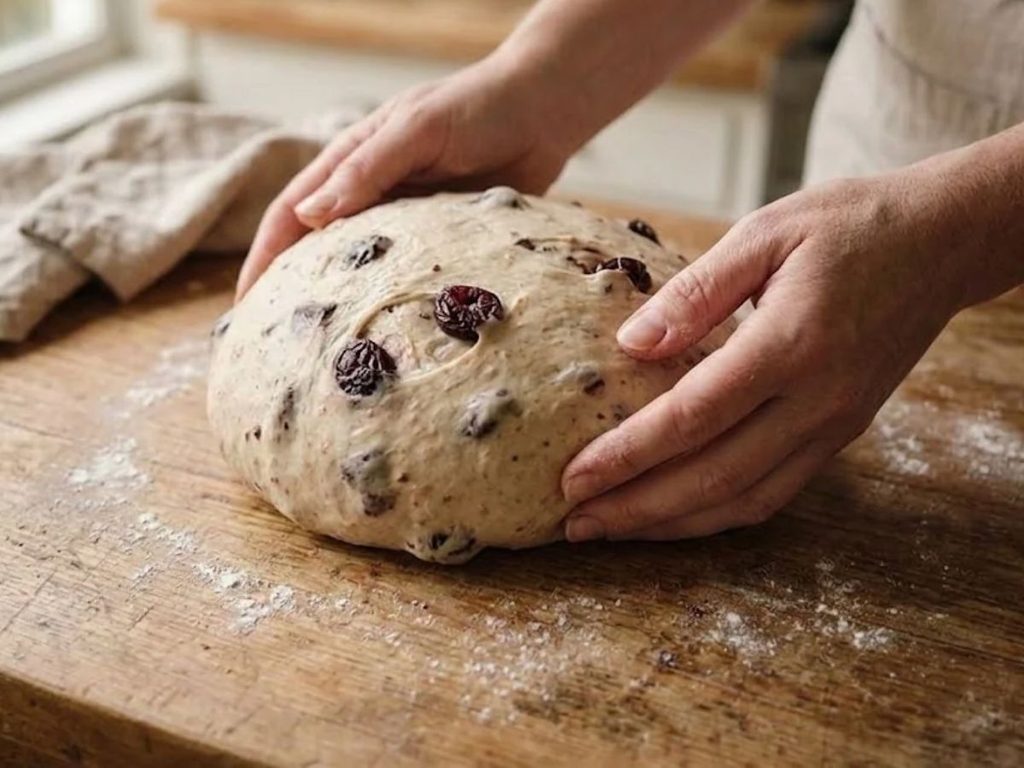
8Transfer to the banneton. Flour the banneton well, flip the dough in so the smooth shaped side faces down, pinch the seam closed on top, and dust with flour. A well-floured banneton matters more here than on a plain loaf, since a cherry or chocolate chunk sitting right against the cloth liner is more likely to stick. Cover with a breathable cloth.
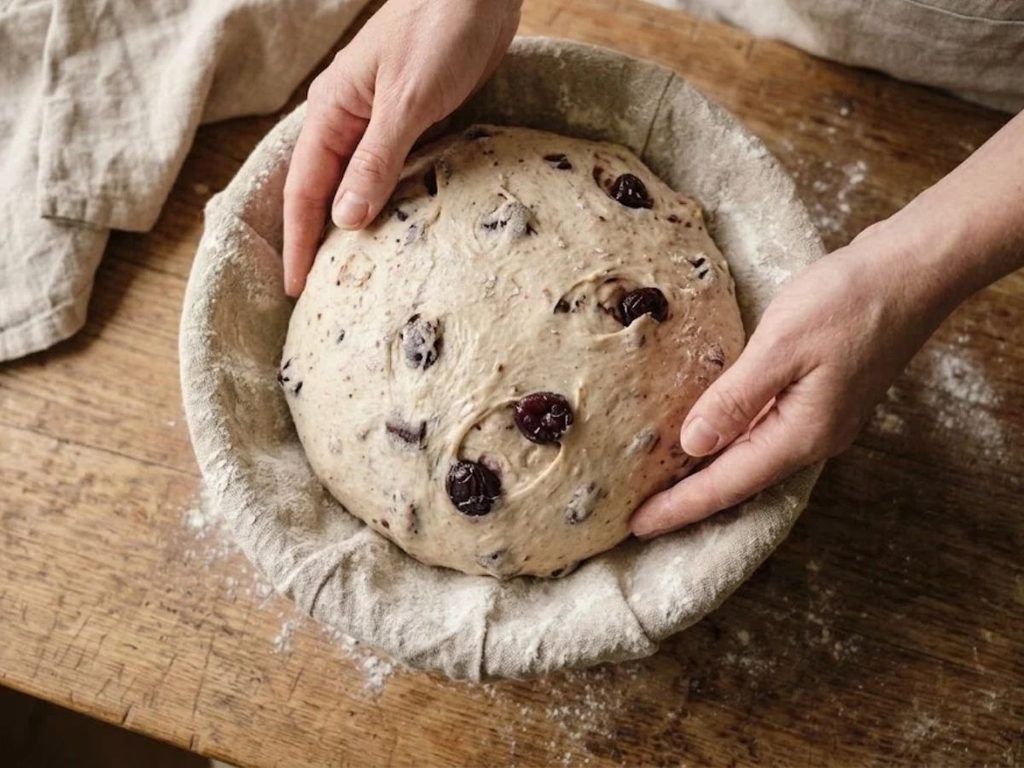
9Refrigerate overnight. Place the banneton in the refrigerator and let the dough proof overnight. An overnight cold proof slows fermentation to a crawl, which is what gives you control over exactly when the loaf goes in the oven the next day. Take it straight from the fridge when you are ready to bake, no need to let it warm up first.
10Preheat. Place the Dutch oven inside your oven and preheat to 475°F, letting it heat for at least 30 minutes. A fully preheated Dutch oven is what gives this loaf its oven spring in the first few minutes of baking, so do not rush this step even if the oven claims it has reached temperature sooner. Chocolate chunks near the crust can scorch fast in a true 475°F oven, so keep an eye on the clock rather than guessing.
11Score and bake. Turn the dough onto parchment, score at a 45 degree angle, transfer to the Dutch oven with 4 ice cubes tucked under the parchment, and bake covered 30 minutes, then uncovered 10 minutes. Score through any cherry or chocolate sitting right at the surface rather than around it, a blade that catches on fruit will tear instead of cutting cleanly. By the time the lid comes off you should see good oven spring with the score mark opened into a clean ear, and the chocolate chunks near the surface will have started to look glossy.
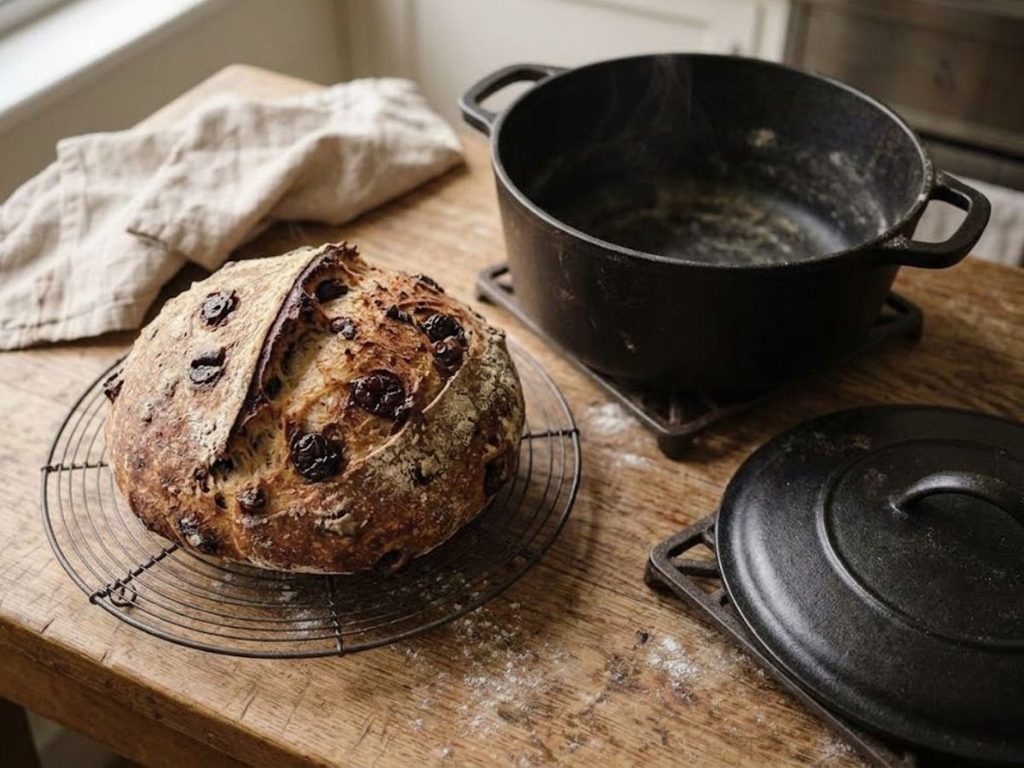
12Finish on a baking sheet. Move the loaf to a baking sheet and bake open about 5 minutes more for a deep, dark crust. Watch this stage closely since any chocolate chunks sitting on the surface can go from glossy to burnt quickly at this temperature. Pull the loaf a minute early if the crust is already darker than you want.
13Cool completely. Move the loaf to a cooling rack and let it cool completely, at least 1 hour, before slicing. The chocolate stays molten inside the crumb for a while after the loaf comes out, so cutting in early gets you a gummy, smeared slice instead of a clean one. Give it the full hour if you can manage the wait.
Tips & Troubleshooting
- Chocolate sank to the bottom: the chunks were too large or the dough was too wet when they went in. Chop the bar smaller and fold gently rather than stirring.
- Crust tastes burnt in spots: a chocolate chunk sitting right at the surface scorched during the open bake. Pull the loaf a minute or two earlier next time, or tuck any surface chunks in slightly before the final bake.
- Crumb came out dense around the fruit: the cherries were added before the dough had enough structure. Make sure the first fold is a real fold, not just a quick stir, before the mix-ins go in.
- Loaf spread flat instead of holding its shape: bulk fermentation ran past 50%, and the extra weight of the fruit makes an over-fermented dough sag even more than a plain loaf would.
How to Store
To store: Keep the loaf in a bread bag at room temperature for up to 2 days. The chocolate can turn a touch soft in a warm kitchen, which is normal and not a sign the loaf has gone off.
To freeze: Slice the whole loaf the day you bake it, then freeze the slices in a single layer before bagging them. Toast a piece straight from frozen for breakfast, no need to thaw it first.
Nutrition
Nutrition is estimated per slice, for a loaf cut into 12 slices, and will vary with the exact cherries and chocolate used.
245
CALORIES
40g
CARBS
6g
PROTEIN
6g
FAT
3g
SAT. FAT
2g
FIBER
11g
SUGAR
230mg
SODIUM
Desi’s Notes
This recipe is Research-backed. It follows the same dough and timing as the plain loaf, with dried cherries and dark chocolate folded in during the stretch and folds. It has not been through a Bake-Keeper kitchen test yet.
I went with tart dried cherries here instead of a sweeter dried fruit on purpose. A loaf this size can tip into dessert territory fast once chocolate is involved, and the tartness pulls it back toward bread. If you only have sweetened cherries on hand, I would cut the chocolate back to 70 g so the loaf does not end up cloying.
Chop the chocolate yourself rather than reaching for chips. Chips are formulated to hold their shape in the oven, which means they stay as tidy little dots instead of melting into the glossy pockets that make this loaf worth coming back to.
Before You Bake
Scaling this recipe up or down? Run your numbers through the Sourdough Calculator. And if you want a printable reference for troubleshooting your crumb and crust, grab the Crumb & Crust Diagnostic Quicksheet.
New to sourdough? Start with the free course
Seven short lessons over 12 days, from mixing your first starter to baking your first loaf with it. Stop anytime.
One short lesson every couple of days. Seven in all, then you’re done. No spam. See our Privacy Policy.
Already have a starter? Bake your first loaf → · Already baking? Browse recipes →
Tried this recipe? Leave a star rating below. It takes 10 seconds and helps other bakers decide what to make next.
Baked this recipe your way? Share it in Community Bakes and inspire other readers.