
Why Sourdough Needs to Cool: Starch, Staling, and Why the Fridge Is the Wrong Place
A hot loaf is still finishing its bake. Here is what starch does as bread cools, why it goes stale, and why the fridge makes it worse.
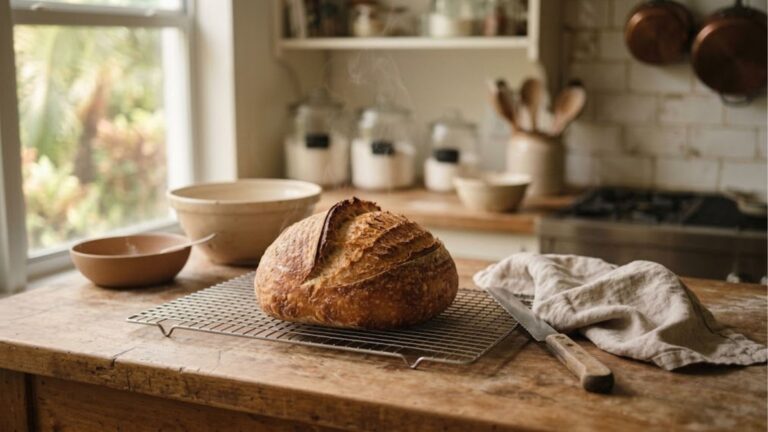
A hot loaf is still finishing its bake. Here is what starch does as bread cools, why it goes stale, and why the fridge makes it worse.
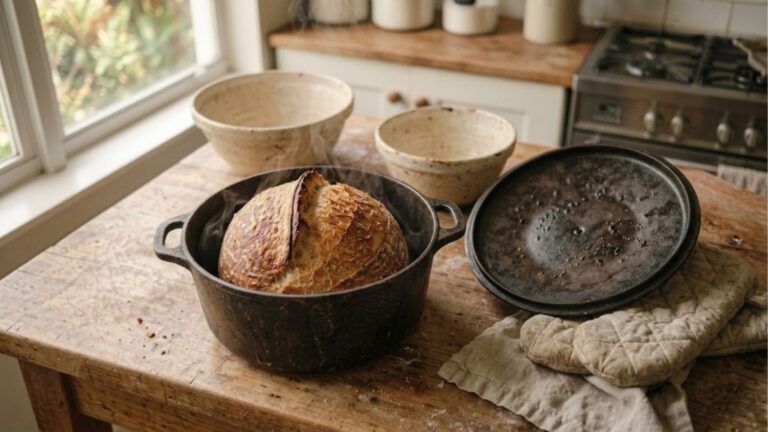
The biggest change in a loaf happens in the first fifteen minutes of baking. Here is what oven spring is, why steam matters, and how to get more of both.
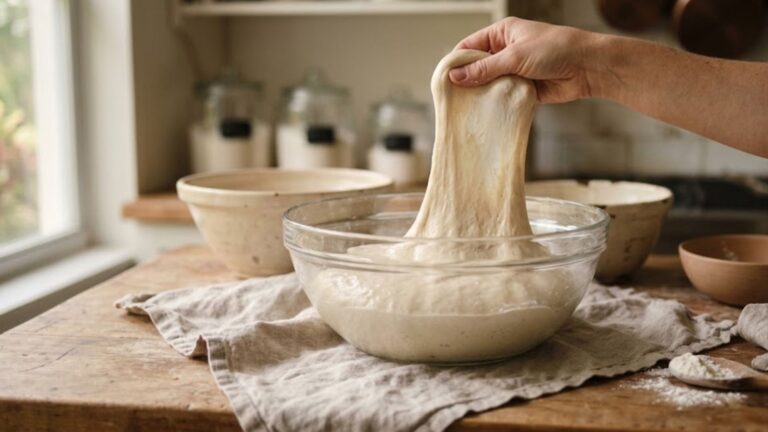
Gluten is built by water, time and gentle motion. Here is how it forms, why stretch and folds work, and how to know when your dough has enough strength.
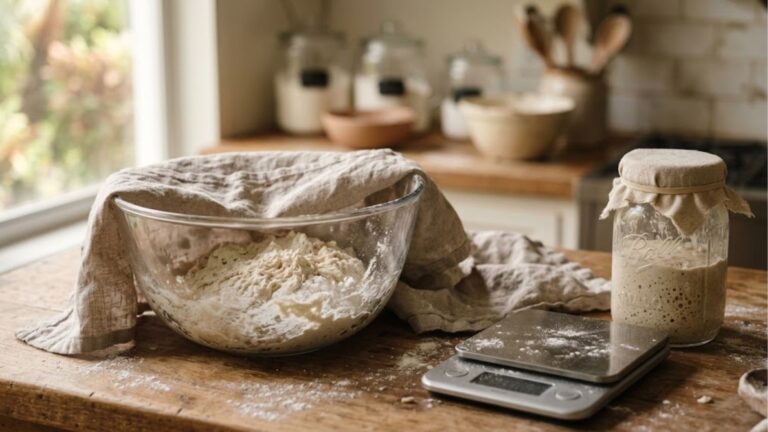
Autolyse is just flour and water, left alone. Here is what happens during that rest, how long to give it, and when it makes a real difference.
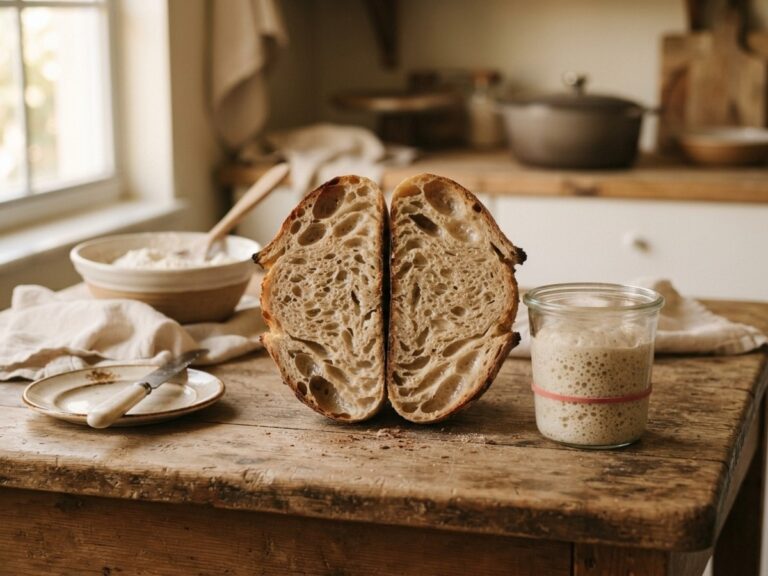
Two bakers, same starter, same recipe, same Saturday morning, and one loaf comes out mellow enough for a picky seven-year-old, and the other could pass for a vinaigrette. I get versions of this message constantly: “I followed the recipe exactly, why does my sourdough taste so different from last week?” The honest answer is that sourness isn’t one dial. It’s two.
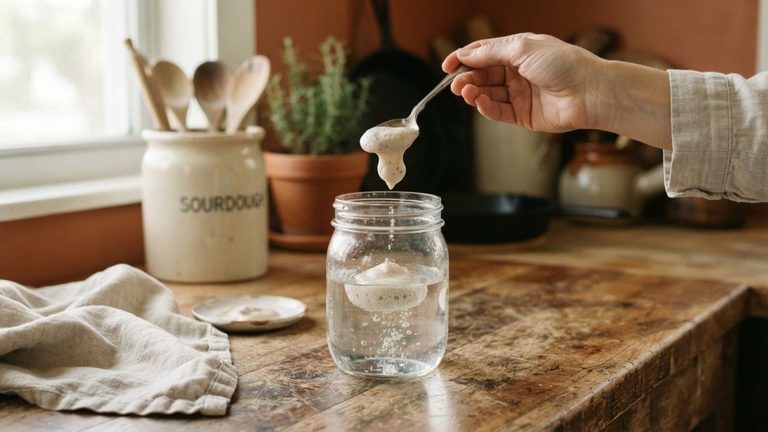
Every beginner guide tells you to drop a spoonful of starter in water and watch what happens. King Arthur’s own bakers tested that advice and found it fails. Here’s the science of why, and the three signs that actually tell you your starter is ready.
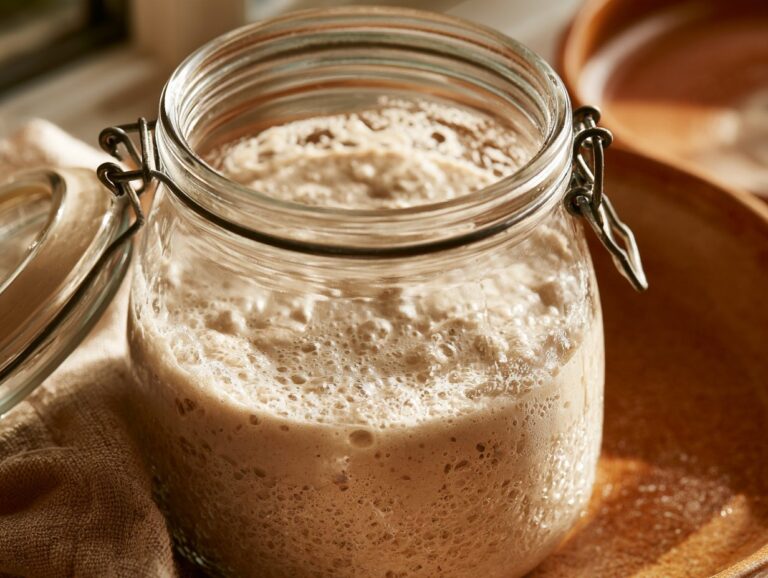
Ever wonder what’s actually fizzing away in that jar on the counter? Here’s a plain-English rundown of the wild yeast and lactic acid bacteria doing all the work in a sourdough starter.
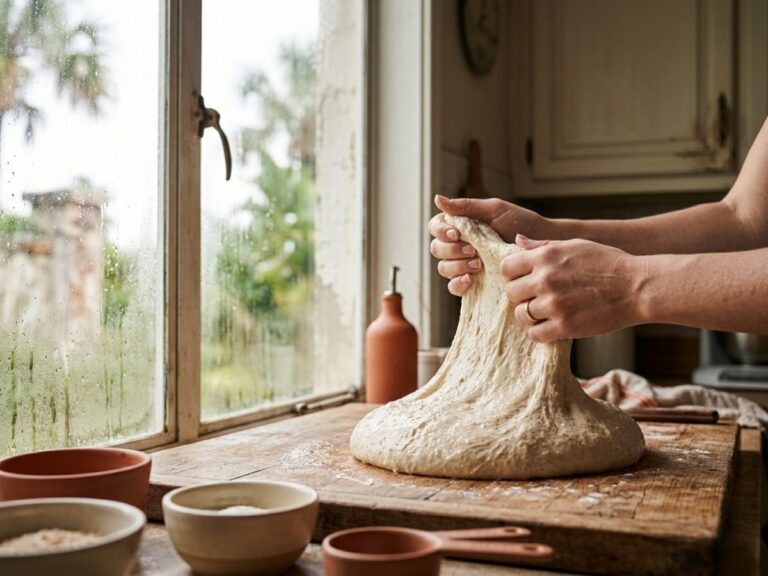
Two numbers explain almost every sourdough timing mystery you’ll ever run into. Here’s how hydration and climate actually shape how fast, or slow, your dough ferments.
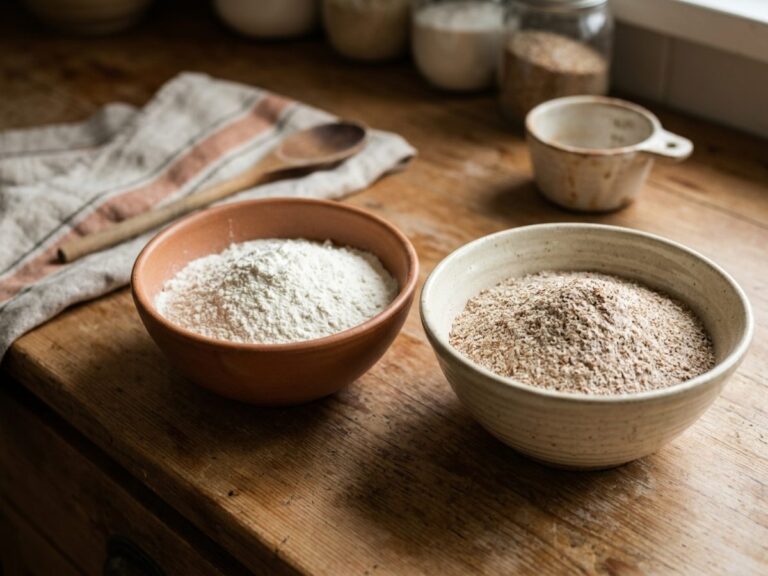
Skip the wellness-blog claims about fermentation. Here’s the actual science of what a long ferment does to phytic acid, gluten structure, and the carbohydrates in your flour.
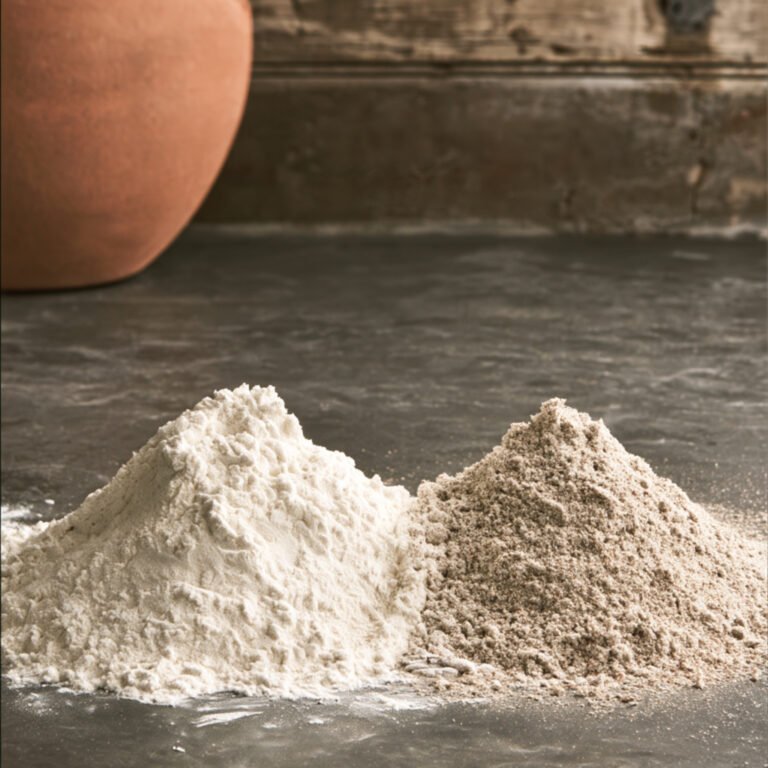
Protein percentage on the bag isn’t the whole story when it comes to how flour performs. Here’s what ash content actually measures and why it’s worth checking before trusting a brand-new bag.
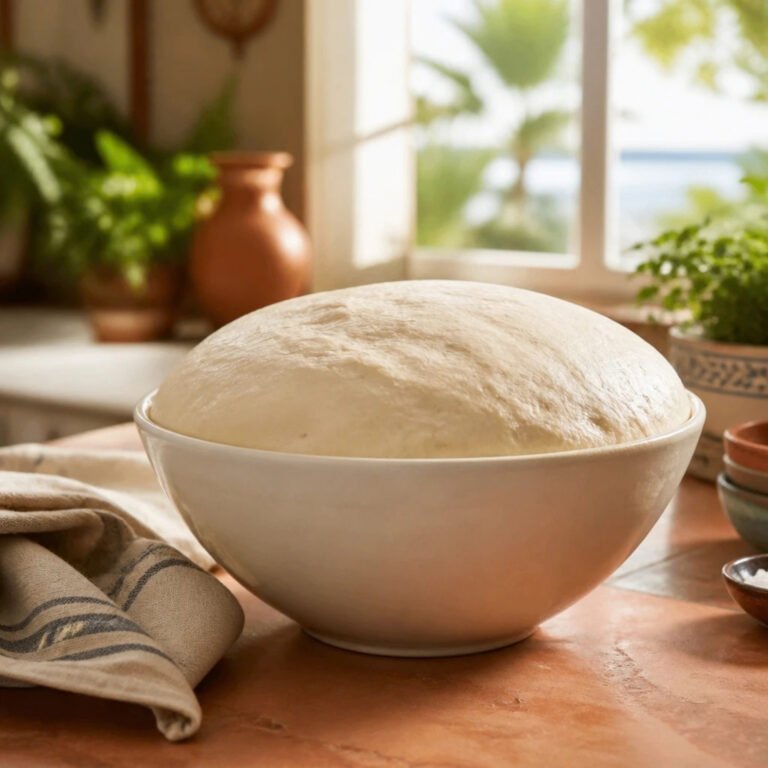
Baking at elevation changes fermentation in ways sea-level bakers rarely think about. Here’s how lower air pressure speeds up your dough’s rise and what to adjust because of it.