
Can You Use Tap Water for a Sourdough Starter?
Most tap water works for a sourdough starter. Here is how chlorine and chloramine differ, what boiling cannot fix, and a simple test for your own water.
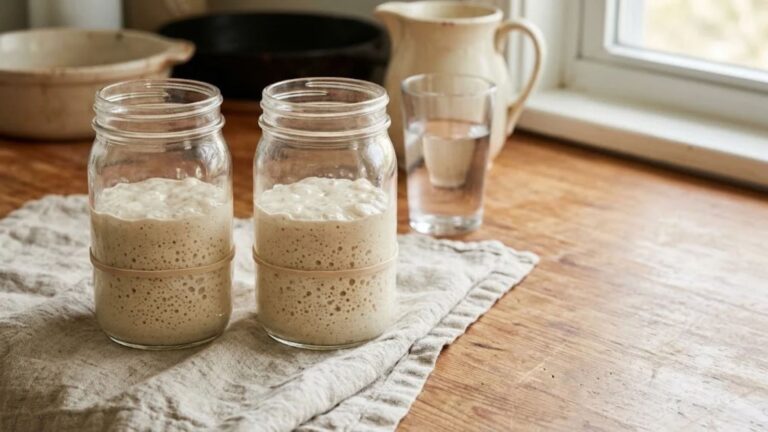
Most tap water works for a sourdough starter. Here is how chlorine and chloramine differ, what boiling cannot fix, and a simple test for your own water.
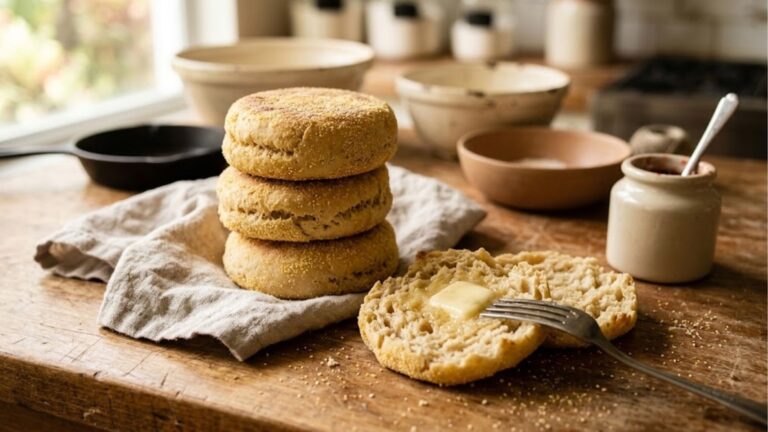
Griddled gluten-free sourdough English muffins with a craggy, fork-split crumb, made with an active starter and psyllium husk and finished in the oven so the centers cook through.
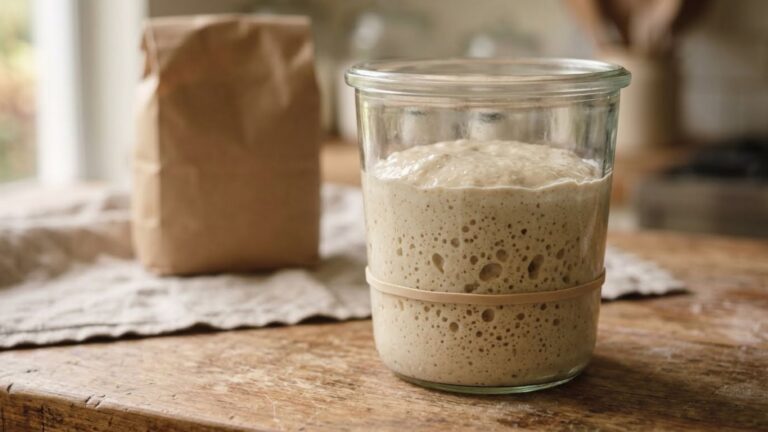
A day-by-day method for a gluten-free sourdough starter built from brown rice flour and filtered water, with feeding amounts in grams, what to expect each day and what to do when it stalls.
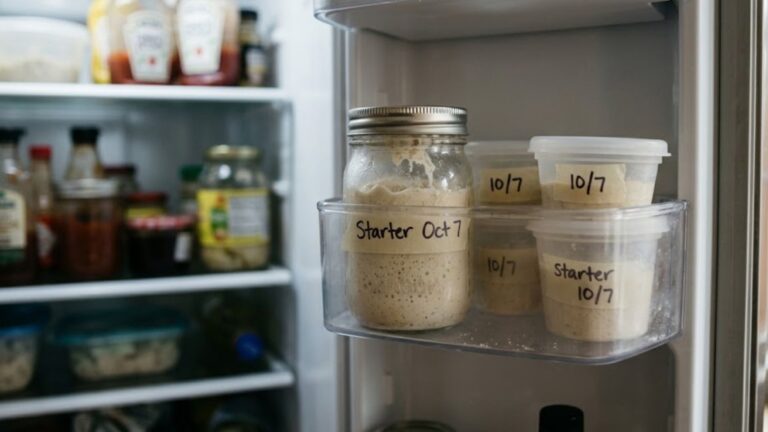
A week away, a month away, or a whole season: here is how to rest your sourdough starter in the fridge or freezer, and how to wake it back up.
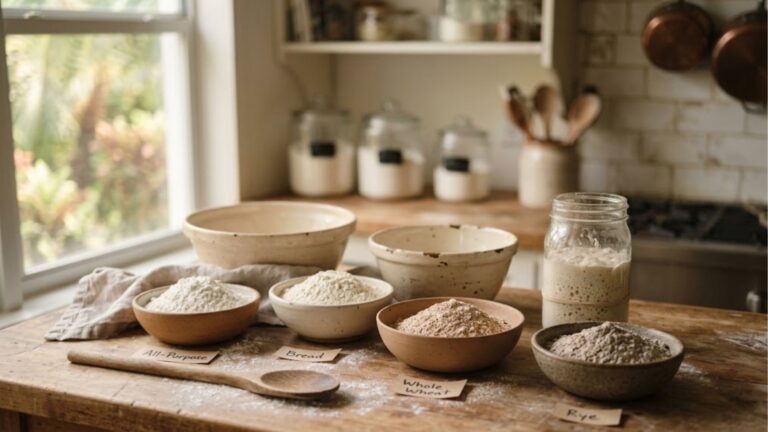
Any wheat flour can feed a starter, but each one changes how fast it rises and how it tastes. Here is how to choose and how to switch without a setback.
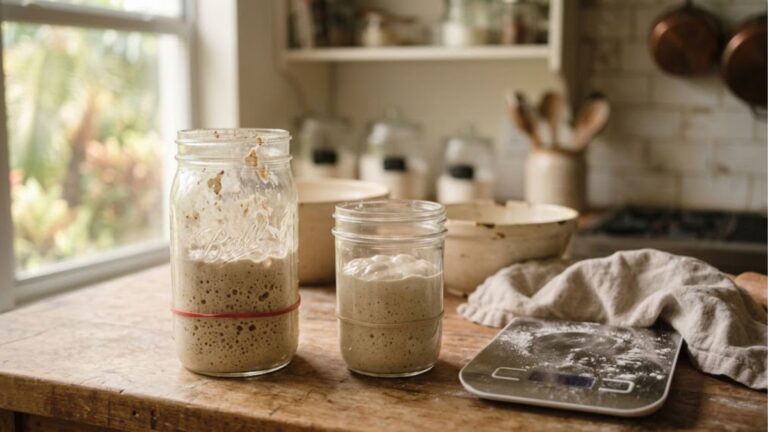
Starter and levain are close cousins that often get mixed up. Here is the difference, why a levain is worth building, and three easy builds.
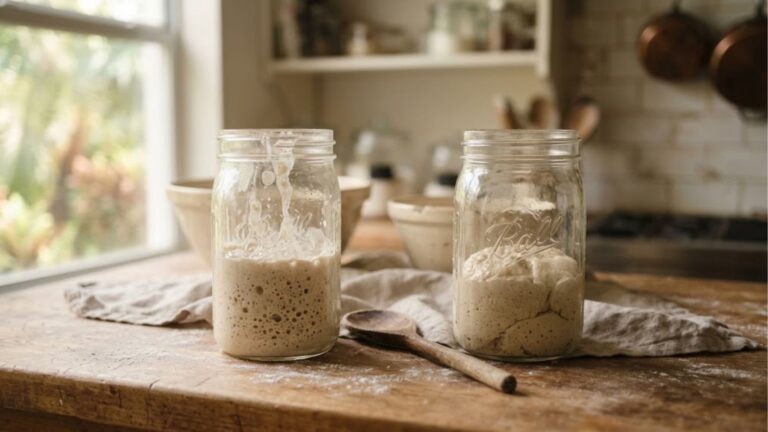
Most starters are fed at 100% hydration, but a thicker starter behaves differently. Here is how hydration changes speed, flavor and storage, and how to convert yours.
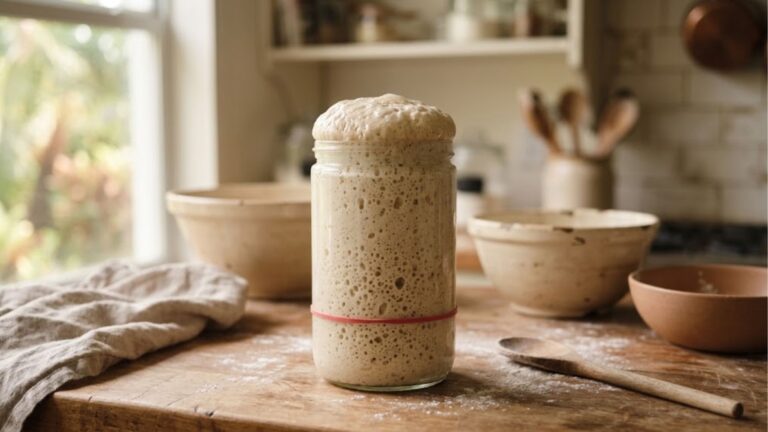
Your starter has a peak, and baking at the right moment makes a real difference. Here is how to spot it with a rubber band, your eyes and your nose.
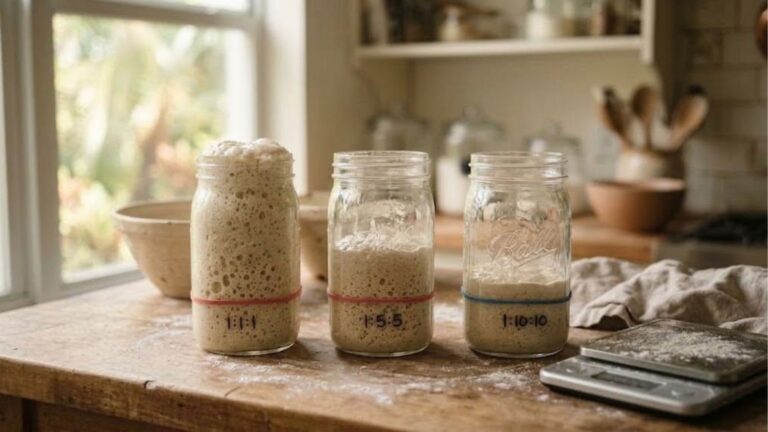
A feeding ratio is just three numbers. Here is what each common ratio does to your starter and how to choose the one that fits your schedule.
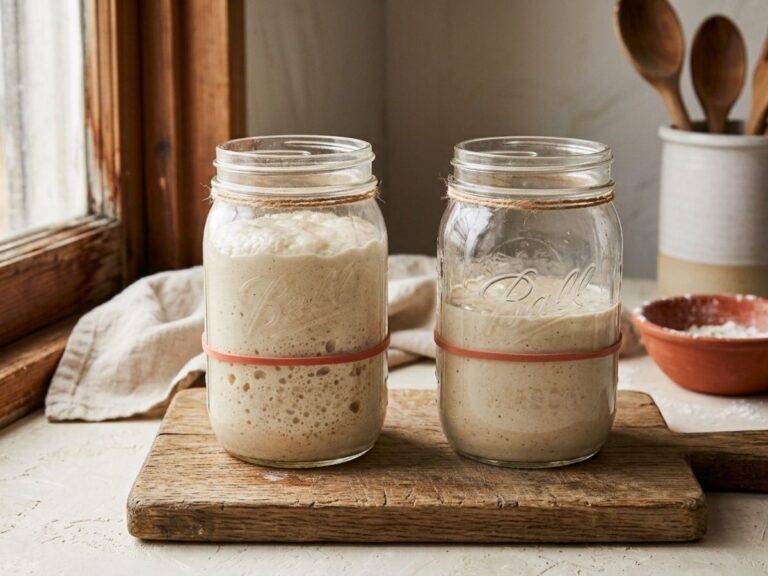
Starter not rising, runny, or smelling like nail polish? Match your symptom to the cause and fix it, including the one reset that rescues a hungry starter.

Humid, hot kitchen? Fix fast fermentation, a hungry starter, sticky dough, and bread that goes soft or moldy, with fixes tested in a South Florida kitchen.
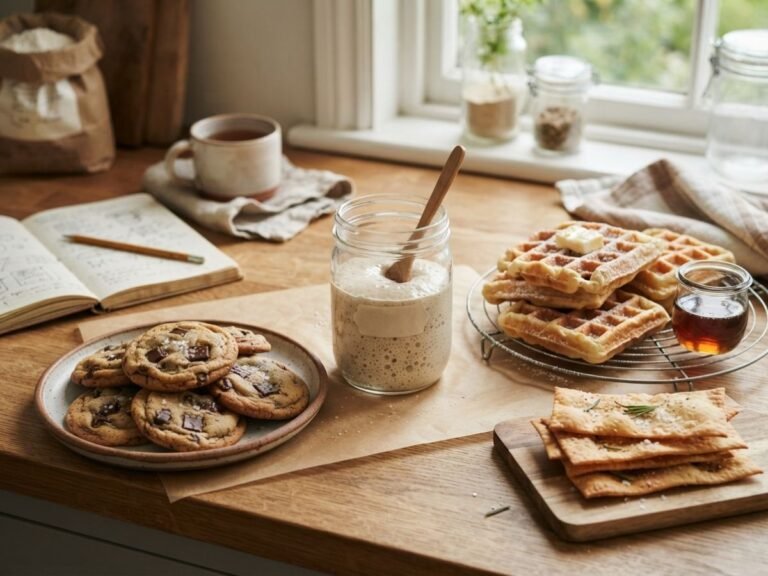
Seven days in, you’ve got a starter and a whole new skill. Here’s how it lives on after this course ends.