
Ube Coconut Sourdough Art Loaf
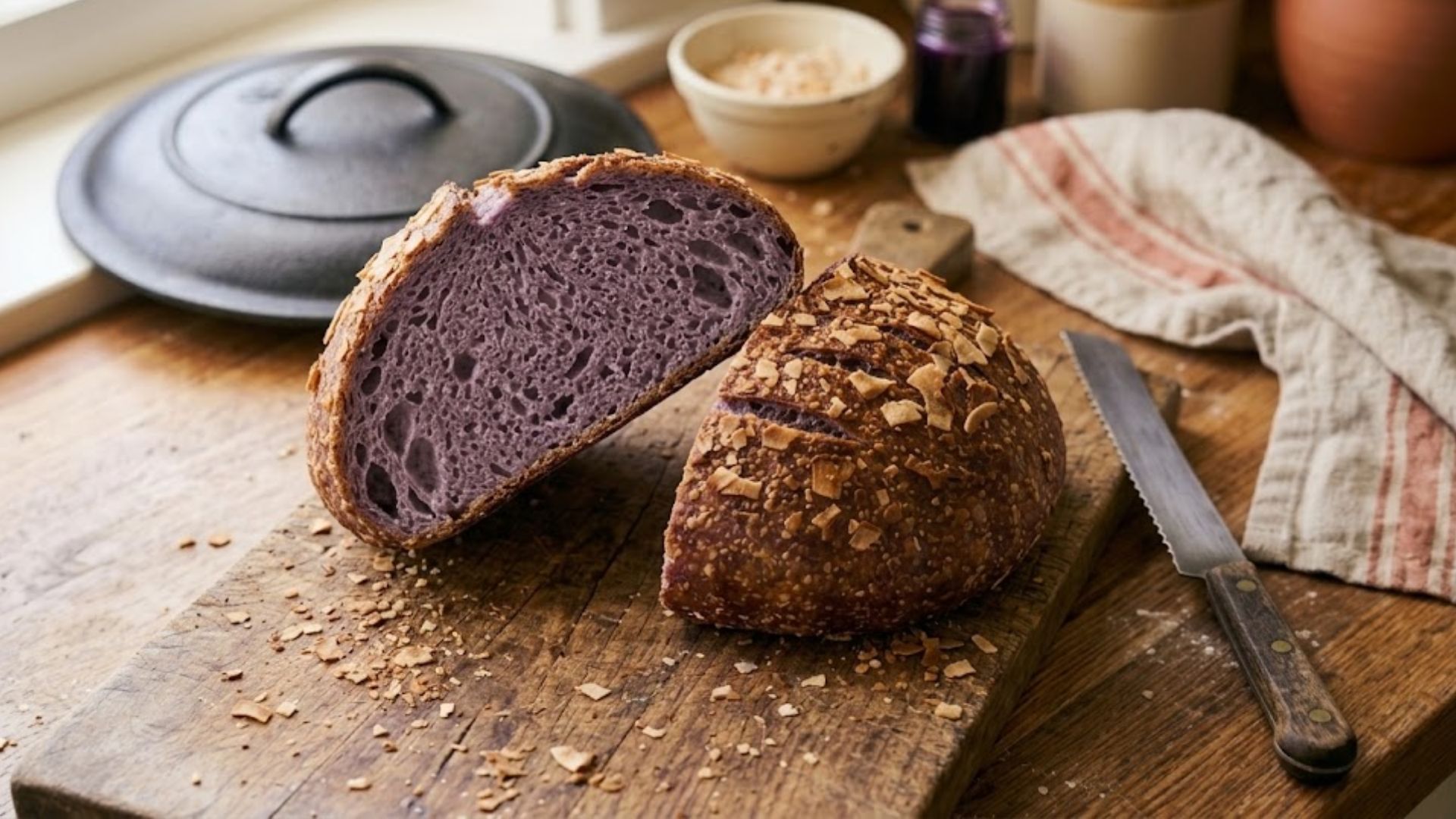
Ube is having a real moment in American bakeries right now, and I wanted to see what it does to a lean sourdough instead of an enriched one. The answer is a loaf with an honest, open crumb in a color that still looks slightly unbelievable even after you have made it twice.
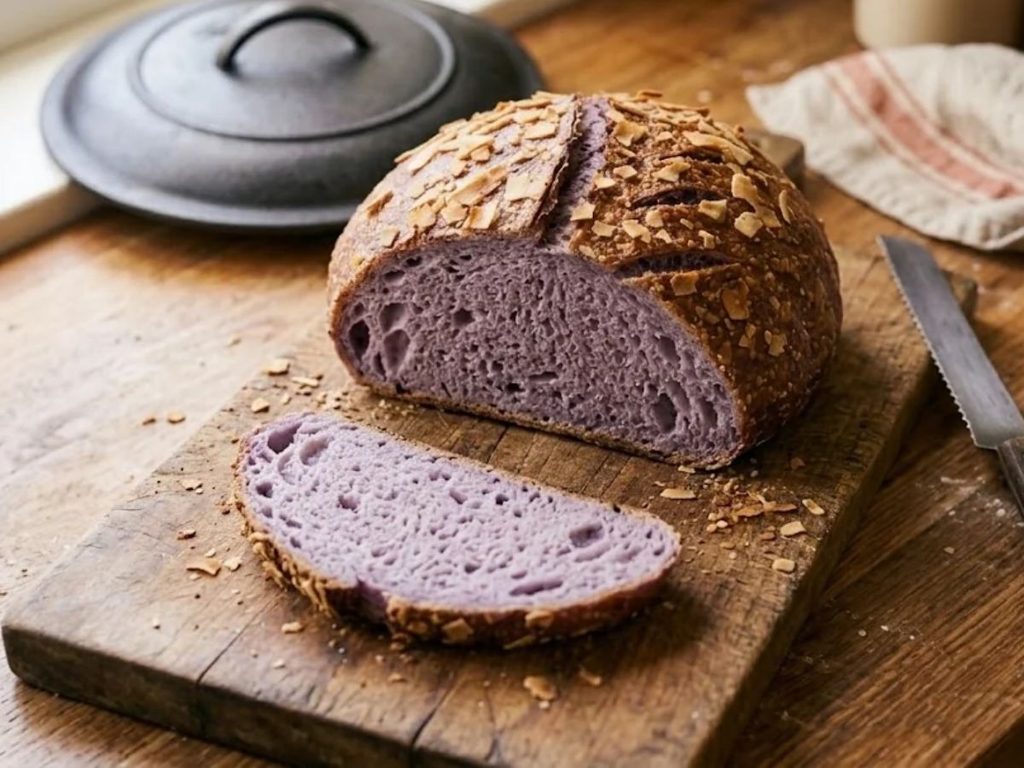
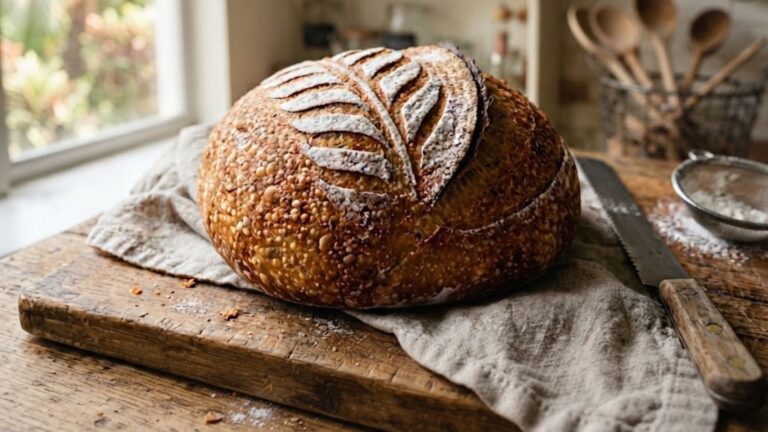
The coconut lives on the crust, not in the dough, so it toasts instead of going soft and steamed. Score it like a leaf and the violet shows through every slice you cut.
Which one is this?Compare all 9 decorative boule recipes
These 9 decorative boule recipes are close cousins. Here is how they differ, so you can pick the right one.
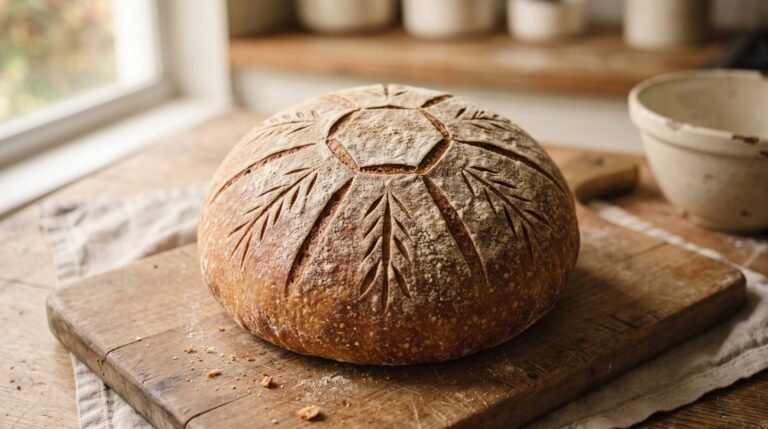
- Wheat Stalk Scored15 hr 15 min · Makes 12 slices
A scored wheat stalk pattern on a dough of bread flour and rice flour.
You want a decorative loaf that needs only scoring.
- Flour-Stencil15 hr 15 min · Makes 12 slices
A stenciled flour design on a dough of bread flour and rice flour.
You want a pattern made with a stencil and flour.
- Snowflake Scored17 hr 15 min · Makes 12 slices
A scored snowflake pattern on a bread flour and whole wheat dough.
You want a winter loaf for the table.
- Painted17 hr 15 min · Makes 12 slices
A painted design on a bread flour and whole wheat dough.
You want a hand-painted loaf.
- Dough Applique Flower Bouquet17 hr 25 min · Makes 12 slices
Baked dough flowers on top of a bread flour and whole wheat loaf.
You want a bouquet loaf to give or serve.
- Marbled Beet and Turmeric Swirl17 hr 20 min · Makes 12 slices
Colored dough swirled through a bread flour loaf.
You want a loaf that shows its color when sliced.
- Black Cocoa Jack-o'-Lantern18 hr 20 min · Makes 12 slices
Black cocoa dough with a jack-o'-lantern design, made with bread flour.
You want a Halloween loaf.
- Pumpkin Spice Swirl Harvest17 hr 15 min · Makes 1 loaf
A pumpkin spice swirl in a dough of bread flour and cornstarch.
You want an autumn swirl loaf.
- Ube CoconutYou are here18 hr 40 min · Makes 1 loaf
Dough colored with ube extract and ube powder, scored in a leaf vein pattern with a toasted coconut crust.
You want a purple loaf with a toasted coconut crust.
Why You’ll Love It
- Built for visual impact. The violet crumb and the leaf-scored, coconut-crusted top make this one of the most dramatic loaves on the site, no food coloring involved.
- An honest lean dough. No butter, no eggs, nothing to hide the sourdough itself behind, just flour, water, starter, salt, and ube.
- A real Filipino pairing. Ube and coconut show up together constantly in Filipino desserts, and the combination translates well into bread.
- Crust-only coconut. Pressing the flakes onto the exterior gets you toasted, nutty crunch on the crust without changing the texture of the crumb.
- Worth the overnight wait. The cold retard deepens the tang and makes a stiff, color-saturated dough much easier to score cleanly. For depth and angle numbers, see my sourdough scoring patterns guide.
Ingredients
This loaf stays lean on purpose. Ube extract and ube powder do the work of color and flavor together, and the coconut only shows up on the crust.
- Caputo Chef 00 flour (500g): a fine-milled Italian flour that gives this loaf the same soft, open crumb as the site’s Plain Sourdough Loaf.
- Filtered water, lukewarm (340g): about 80°F. Chlorinated tap water can slow your starter, so filtered is worth the extra step here.
- Active sourdough starter (100g): fed and at its peak, floating or nearly floating when you drop a spoonful in water.
- Ube extract (2 tsp / 10g): the main source of flavor and the brightest purple, stirred into the water first.
- Ube powder (3 Tbsp / 20g): deepens the color and rounds out the flavor with real dehydrated purple yam, mixed into the flour.
- Fine sea salt (10g): about 2 tsp, added after the initial rest.
- Unsweetened toasted coconut flakes (40g): about ½ cup, pressed onto the crust only, not mixed into the dough.
Equipment
Gear guides: Sourdough Equipment Guide·Kitchen Scales·Banneton Sizing·Scoring Tools·Storing the Loaf·Pizza Stone vs. Baking Steel·Shop All Picks →
- Kitchen scale: every gram here matters, especially with two ube ingredients to balance against the flour.
- Banneton (proofing basket) with cloth liner: holds the loaf’s shape through the overnight cold proof.
- Dutch oven: traps steam for the oven spring that opens the leaf scoring.
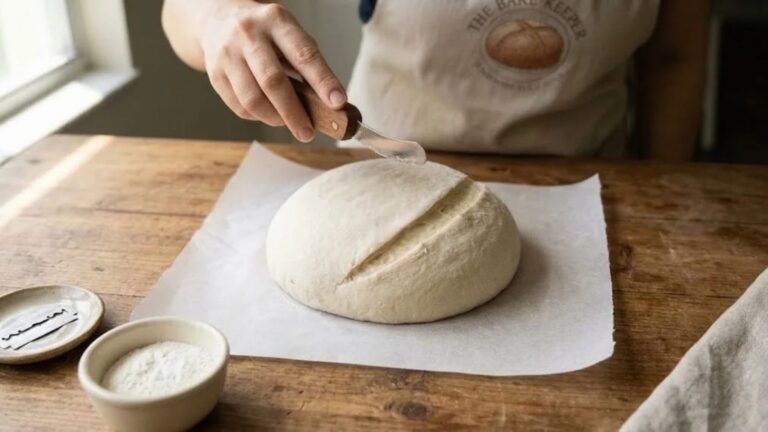
- Lame or very sharp, thin blade: for a clean, confident score through the coconut-crusted top.
- Shower cap or reusable bowl cover: keeps the dough from drying out during bulk fermentation and the cold proof.
- Parchment paper: for transferring the scored dough into the hot Dutch oven without deflating it.
- Small bowl: for toasting the coconut flakes before pressing them onto the dough.
- Pastry brush or small spray bottle: for misting the dough so the coconut flakes stick.
- Cooling rack: lets air circulate under the loaf so the bottom crust does not turn soggy as it cools.
Sample Schedule (2-Day)
Day 1
- Morning: mix the dough, rest, and do the stretch and folds.
- Midday: bulk ferment about 3 hours.
- Afternoon: pre-shape, shape, press on the coconut, and place in the banneton.
- Evening: refrigerate overnight.
Day 2
- Morning: preheat the oven with the Dutch oven inside.
- Morning: score, bake, then cool at least 1 hour before slicing.
Ube Coconut Sourdough Art Loaf
Method
- Whisk the starter and ube extract into the 340 g lukewarm water, about 80°F, until fully dissolved and evenly violet.
- Add the flour and ube powder and stir until no dry flour remains. Cover and rest 30 to 40 minutes.
- Add the salt and knead for 5 minutes, until smooth, or squeeze it in and do stretch and folds.
- Stretch and fold: pull the dough up at the side and fold toward the center, rotating to fold every side. Cover and rest 30 minutes.
- Repeat the stretch and fold three more times, for a total of 4 rounds, resting 30 minutes between rounds.
- Bulk ferment 2.5 to 3.5 hours at room temperature, until risen about 50 percent (not doubled).
- Turn the dough out onto a floured surface, fold the top edges in twice to form a loose round, and bench rest 15 minutes.
- Flip the dough, roll into a tight ball to build surface tension, and pinch the seam closed on the bottom.
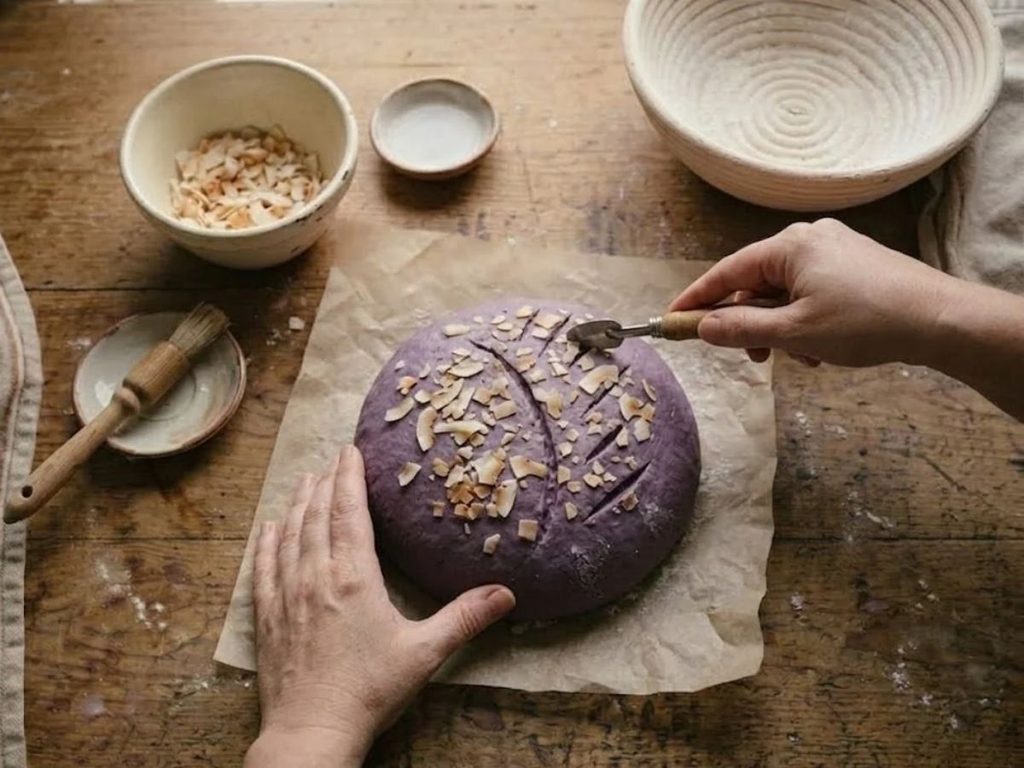
- Mist the smooth top of the shaped dough and press the toasted coconut flakes onto it. Flour the banneton, flip the dough in coconut-side down, pinch the seam on top, and dust with flour.
- Cover and refrigerate overnight, 10 to 16 hours.
- Preheat the oven with the Dutch oven inside to 475°F, about 45 minutes.
- Turn the dough onto parchment, score a leaf-vein pattern about ½ inch deep, transfer to the Dutch oven with 4 ice cubes, and cover.
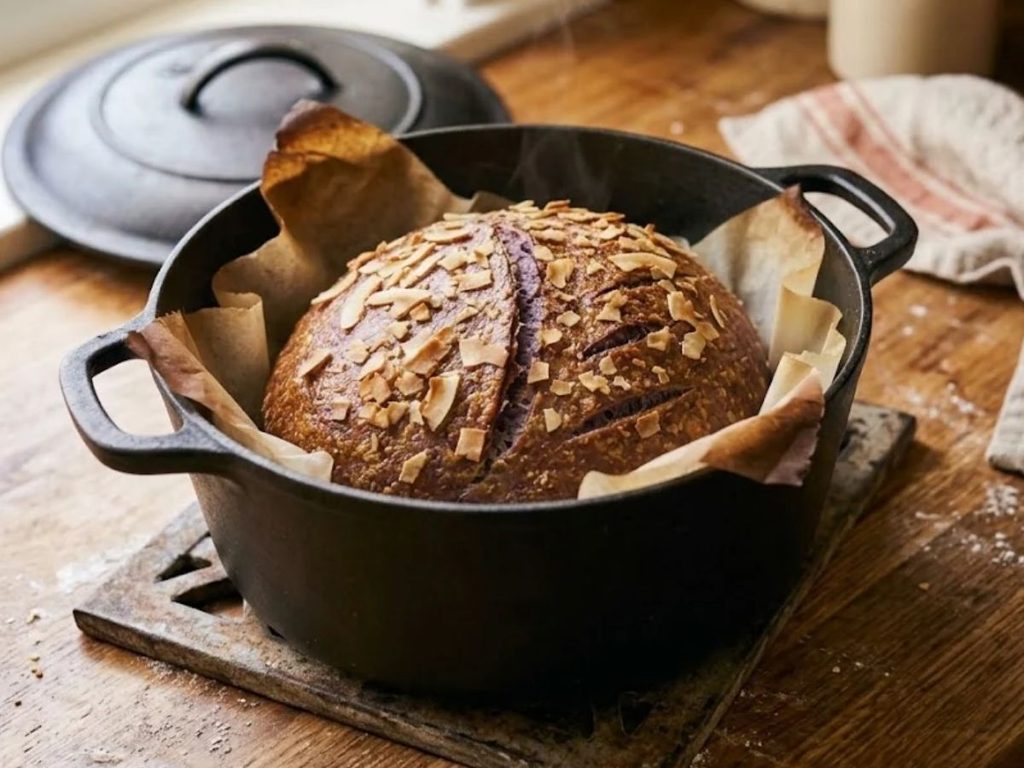
- Bake covered 30 minutes, then uncovered 15 minutes, until deeply golden.
- Cool on a rack at least 1 hour before slicing.
Notes
Save This Recipe
Get it emailed to you now, plus new recipes as they go up.
Your email is safe with me. I’ll send this recipe straight over. No spam, ever. You can unsubscribe anytime.
How to Make It
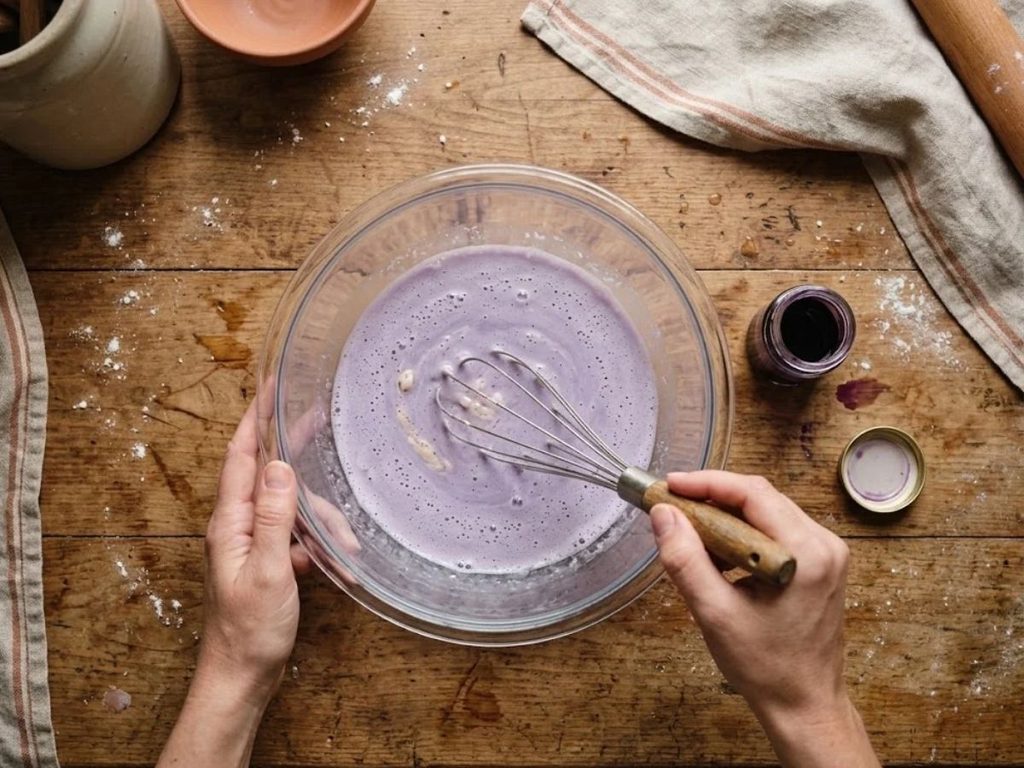
1Dissolve the starter and ube extract in the water. Whisk the starter and ube extract into the 340 g of lukewarm water, about 80°F, until the starter is fully dissolved and the water turns an even pale violet with no streaks. A few small bubbles on the surface are a good sign your starter is active and ready to leaven. In a South Florida kitchen running the air conditioning, your tap water is often cool enough on its own, so skip warming it if the kitchen already feels warm.
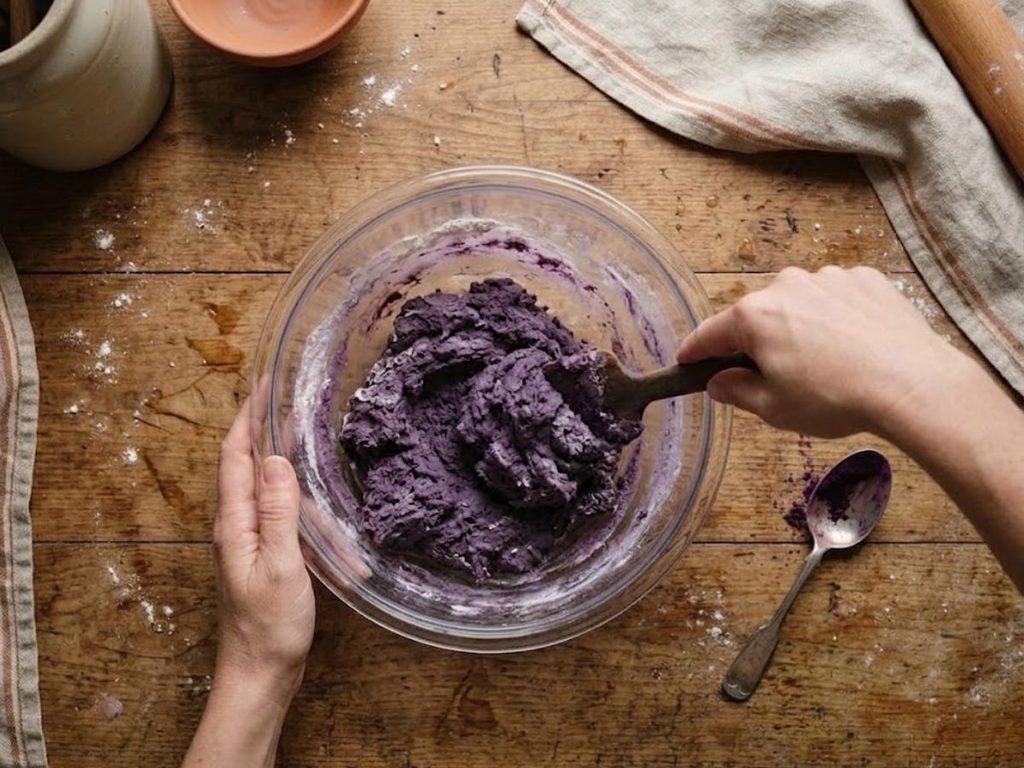
2Mix in the flour and ube powder, then rest. Add the 500 g of flour and the 3 Tbsp of ube powder and stir until no dry flour remains and you have a shaggy, deep violet mass. The dough will look stiffer than a plain loaf at this stage because the ube powder drinks up some of the water, and that is expected, not a mistake. Cover and rest 30 to 40 minutes so the flour fully hydrates.
3Add the salt and knead. Add the 10 g of salt and knead for about 5 minutes, until smooth, or squeeze the salt in with wet hands and do a round of stretch and folds in the bowl instead. The dough should feel tacky but no longer sticky to the touch once the salt is fully worked in.
4First stretch and fold. Pull the dough up at the side of the bowl and fold it toward the center, rotating the bowl to fold every side, the same motion used on the site’s Plain Sourdough Loaf. Cover and rest 30 minutes. The dough should feel slightly less sticky and a bit more elastic by the end of this rest, a sign the gluten network is starting to organize.
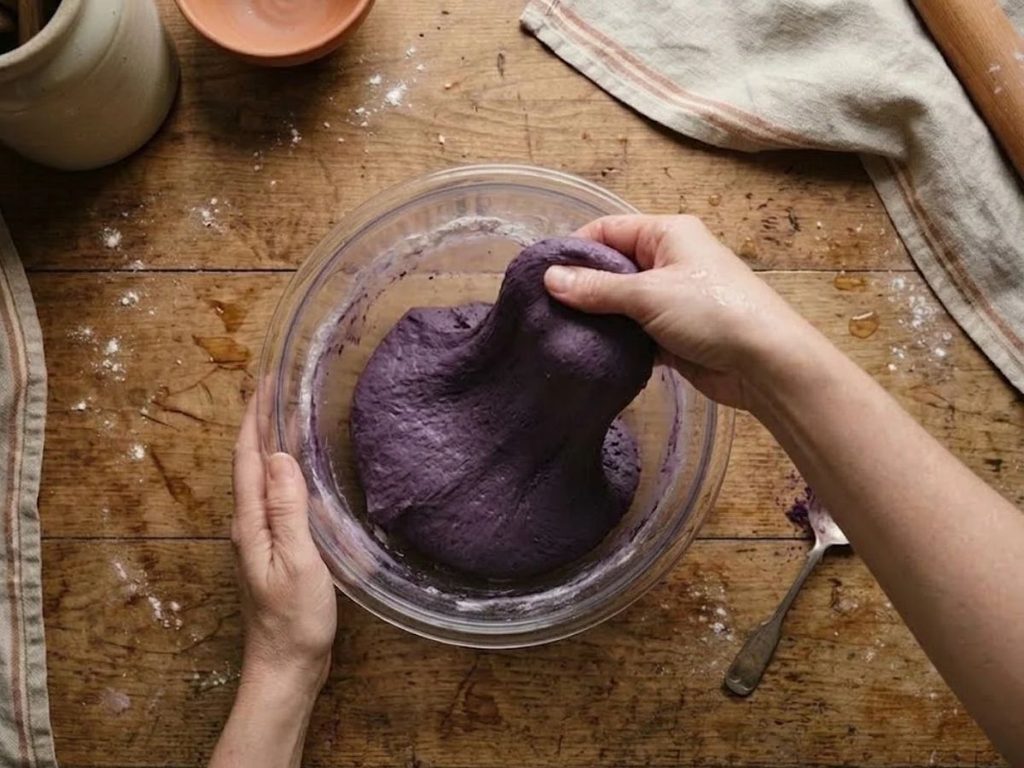
5Three more rounds of stretch and fold. Repeat the stretch and fold three more times, for a total of 4 rounds, resting 30 minutes between rounds. By the final round the dough should hold its shape when you pull your hand away instead of slumping flat, which tells you the structure is ready for bulk fermentation.
6Bulk ferment. Bulk ferment at room temperature for 2.5 to 3.5 hours, until the dough has risen about 50 percent, not doubled. In an air conditioned South Florida kitchen this usually lands around the 3 hour mark, but a warmer kitchen or a sluggish starter can push it past 4 hours, so watch the dough rather than the clock.
7Turn out and pre-shape. Loosen the dough from the bowl and turn it out onto a lightly floured surface. Fold the top edges in toward the center twice to form a loose round, then let it bench rest, uncovered, for 15 minutes. This short rest relaxes the gluten so the dough stops fighting you during final shaping.
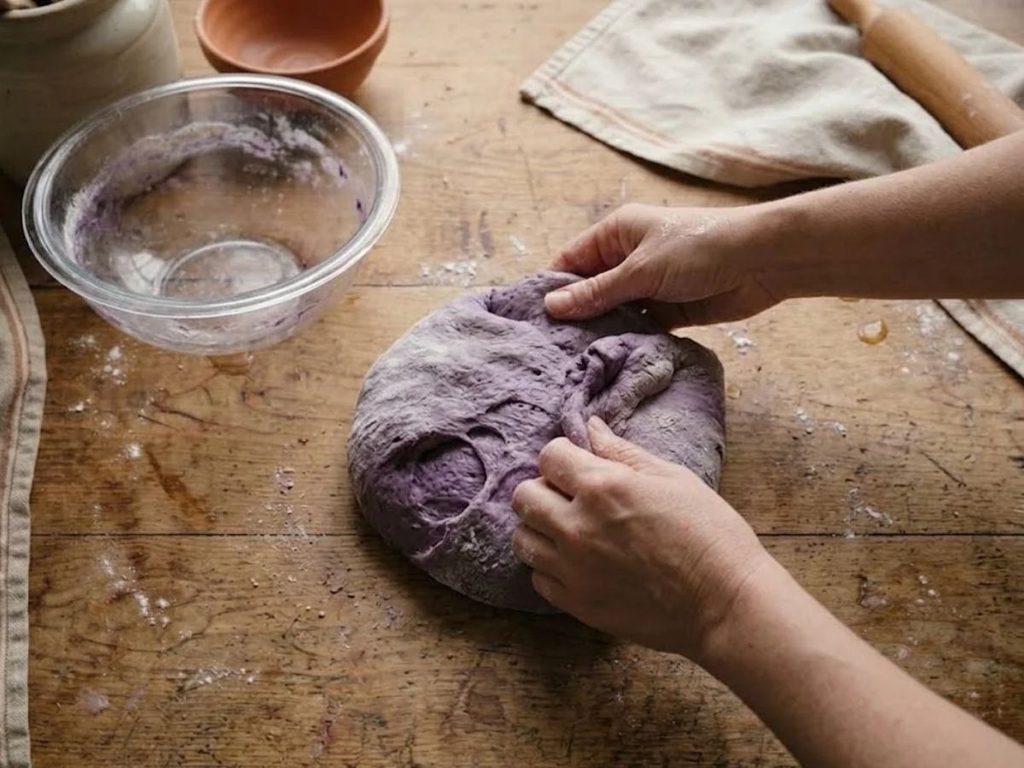
8Final shape. Flip the rested round over, then roll it into a tight ball, dragging it across the counter to build surface tension until the top looks smooth and taut. Pinch the seam closed on the bottom. A properly tight shape is what lets the leaf scoring hold its pattern instead of blowing out unevenly in the oven.
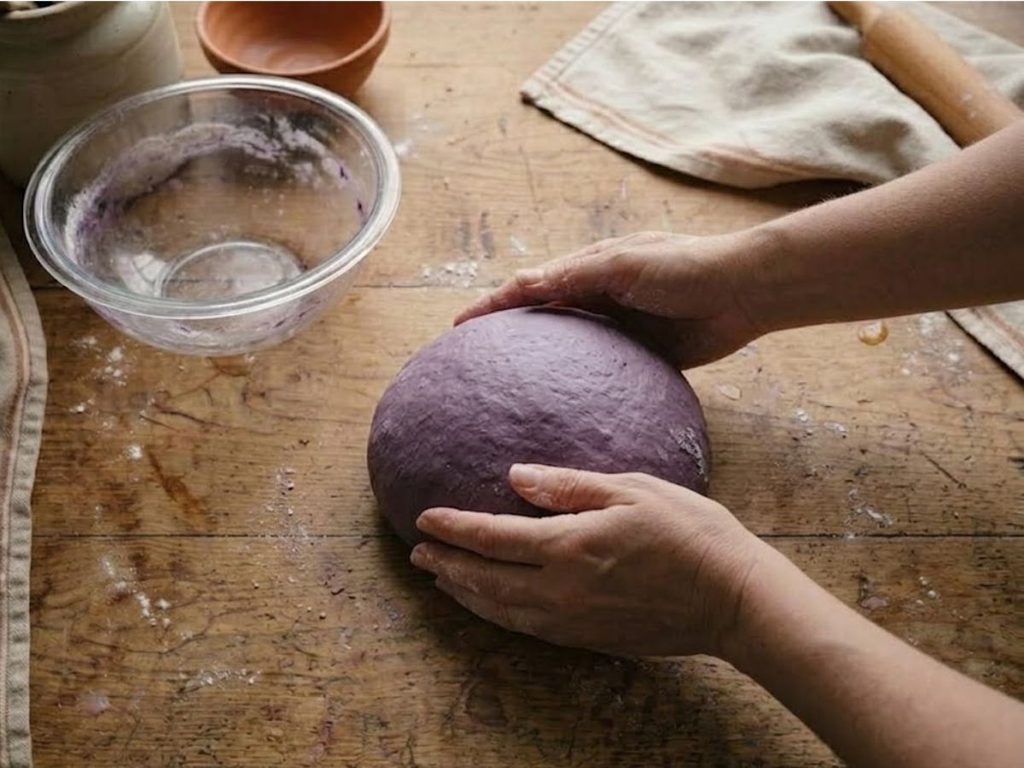
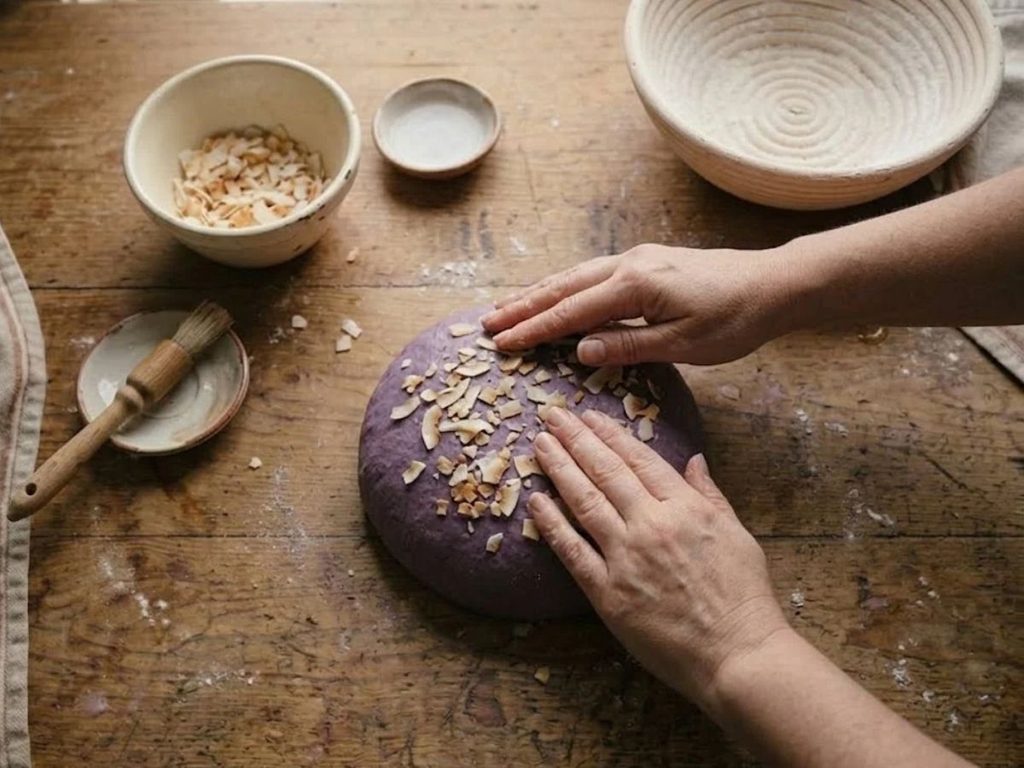
9Press on the coconut and place in the banneton. Lightly mist the smooth top surface of the shaped dough with water, then press the toasted coconut flakes evenly over it. Flour the banneton well, then flip the dough in so the coconut-covered, smooth side is down against the cloth, since this is what will become the top crust once you turn it out to bake. Pinch the seam closed on top and dust with flour.
10Refrigerate overnight. Cover with a shower cap or bowl cover and refrigerate overnight, at least 10 hours and up to 16. This cold retard slows fermentation enough to deepen the tang and makes the dough firm and easy to score straight from the fridge the next morning.
11Preheat the oven. About 45 minutes before baking, set a Dutch oven inside your oven and preheat both to 475°F. A fully hot Dutch oven is what gives the crust its first blast of steam-trapped oven spring, so do not rush this step even though nothing is visibly happening.
12Score the leaf pattern and transfer. Turn the dough out of the banneton onto a piece of parchment paper, coconut side up. Score a center line down the length of the loaf, then angle shorter cuts outward from it on both sides like the veins of a monstera leaf, cutting about ½ inch deep at a confident, steady angle. Lift the dough by the parchment into the hot Dutch oven and tuck 4 ice cubes down beside it, under the parchment, before covering with the lid.
13Bake. Bake covered for 30 minutes, then remove the lid and bake uncovered for 15 minutes more, until the scored veins have opened wide and the coconut on the crust has toasted to a deep golden brown without scorching. If the coconut is browning too fast in the last few minutes, loosely tent that side with a scrap of foil.
14Cool and slice. Move the loaf to a cooling rack and let it rest at least 1 hour, ideally longer, before slicing. Cutting in too soon lets steam escape before the crumb finishes setting, and you will lose some of the clean color contrast you worked for. Slice to reveal the crumb, which should be an even soft lavender throughout, flecked slightly darker near the coconut-crusted top.
Tips & Troubleshooting
- If the dough feels stiff after adding the ube powder: add water a tablespoon at a time until it comes back together. Powder absorbs differently batch to batch, so treat the original hydration as a starting point, not a rule.
- If the color looks more blue than purple: ube extract brands vary. A pinch more ube powder usually warms the color back toward violet without changing the flavor much.
- If the coconut browns too fast: tent that side loosely with foil for the uncovered part of the bake.
- If your kitchen runs warm: a warm kitchen can finish bulk fermentation closer to 2 hours. Watch the 50 percent rise, not the clock.
- If the crumb looks patchy instead of even: the ube powder may not have fully hydrated during the rest in step 2. Give that rest the full 40 minutes next time.
How to Store
To store: Keep the loaf cut-side down on a board at room temperature, wrapped in a clean kitchen towel, for up to 3 days. A plastic bag softens the crust faster than you want.
To freeze: Slice the cooled loaf fully, then freeze the slices in a zip-top bag for up to 3 months. Toast slices straight from frozen rather than thawing them first, which keeps the crumb from turning gummy.
Nutrition
These numbers are an estimate per slice, based on twelve slices per loaf and the ingredients as written. Your exact numbers will vary with slice size and substitutions.
178
Calories
34g
Carbs
5g
Protein
2g
Fat
2g
Fiber
195mg
Sodium
Desi’s Notes
Ube extract and ube powder are not interchangeable, and I would not swap one in for the other without adjusting something else in the dough. Extract alone gives a brighter color but a thinner flavor, and powder alone looks a little muted but tastes more clearly like real ube. Using both is what gets you both.
I suspect sourdough’s acidity is part of why this color stays clean through a 475°F bake instead of dulling the way some natural dyes do in a hot oven, though I have not measured that against a yeasted version side by side. Either way, keep the coconut on the crust. Folded into the dough it turns soft and steamed, and the whole point here is the crunch you can see.
Before You Bake
Scaling this recipe up or down? Run your numbers through the Sourdough Calculator. And if you want a printable reference for troubleshooting or timing, browse all six Printable Quicksheets.
New to sourdough? Start with the free course
Seven short lessons over 12 days, from mixing your first starter to baking your first loaf with it. Stop anytime.
One short lesson every couple of days. Seven in all, then you’re done. No spam. See our Privacy Policy.
Already have a starter? Bake your first loaf → · Already baking? Browse recipes →

Tried this recipe? Leave a star rating below. It takes 10 seconds and helps other bakers decide what to make next.
Baked this recipe your way? Share it in Community Bakes and inspire other readers.